A Comprehensive Guide to Choosing Kitchen Wood in Saudi Arabia
Discover the best types of kitchen wood, including moisture-resistant MDF, Plywood, HPL, and natural wood. Learn how to choose durable kitchen cabinet materials with Bahooth Factory.
Makaseb
September 10, 2026 at 1:18 pm AST
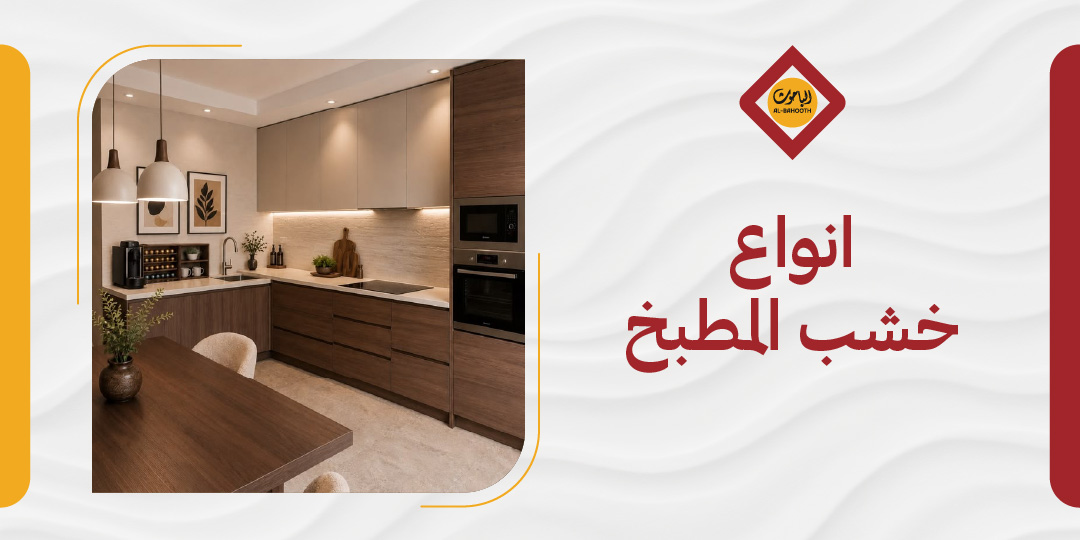
When searching for the right types of kitchen wood, most homeowners are not looking for dry academic definitions or technical jargon. What you truly need is a clear, practical decision: which material suits your kitchen, daily habits, and budget?
The Saudi market offers a wide range of options—from moisture-resistant MDF and natural wood to blockboard, plywood, and particle board. Each material has distinct operational conditions, making it ideal for certain applications while less suitable for others.
Choosing kitchen wood materials extends far beyond the name of the raw material. It deeply involves the finishing method, which dictates the cabinets' resistance to moisture and scratches, as well as ease of cleaning. Bahooth Factory provides end-to-end solutions for kitchen design and manufacturing in Saudi Arabia, helping clients select the optimal board types and finishes for their space and lifestyle.
If you are ready to make a decision, contact Bahooth Factory for a specialized consultation, custom design, and price estimate tailored to your kitchen dimensions and budget.
What Are the Types of Kitchen Wood?
When evaluating kitchen wood types, people often confuse two distinct concepts: the internal cabinet carcass (core) and the external surface finish (facing). Understanding this distinction is the essential starting point for any purchasing decision, as what you see on the surface is not necessarily what supports the cabinet from within.
A kitchen cabinet consists of two separate elements:
- The Core Board: Forms the structural framework and bears structural weight.
- The Surface Finish: Grants the surface its aesthetic appearance, color, and practical properties like moisture and scratch resistance.
How Structure Differs from Facings
The structural material forms the load-bearing framework, while the facing material acts as the protective outer skin. These are independent layers that must be evaluated separately.
- Core Structural Materials: Include MDF, HDF, plywood, blockboard, particle board, and natural wood. They carry structural loads and dictate overall cabinet strength.
- Facing/Door Materials: Include HPL, PVC, acrylic, Polylac, and liquid paints/coatings. They govern exterior aesthetics and resistance to daily wear.
- HPL (High-Pressure Laminate): HPL is not a standalone board; it is a decorative laminate pressed onto a core board like MDF or particle board.
Comparing an "HPL kitchen" to an "MDF kitchen" without knowing what lies beneath each surface is inaccurate, as both may share the exact same internal wood core.
Why the Finish Type Matters
Finishing is far more than an aesthetic layer; it directly impacts daily performance and how well the cabinet withstands environmental conditions. Choosing the right finish ensures a kitchen maintains its appearance for years.
However, finishing alone does not guarantee longevity. Several factors equally determine a kitchen's operational lifespan:
- Manufacturing Precision: Properly sealed edge banding prevents moisture from penetrating the core board.
- Hardware Quality: High-grade hinges and drawer slide mechanisms maintain long-term door alignment.
- Targeted Waterproofing: Thorough sealing around sinks and dishwashers protects adjacent panels from standing water.
- Field Installation: Professional installation ensures materials perform to their full structural specification.
Most Popular Board Materials
Selecting the right board depends on the specific zone of the kitchen and its intended purpose. Kitchen wood types vary in density, composition, and resistance to moisture and heat.
1. Is Natural Wood Suitable?
Solid natural wood—such as beech, oak, walnut, and pine—lends an authentic character and high structural endurance. It can be sanded and refinished multiple times over its lifetime. It works well for doors, decorative frames, and visible classical surfaces, provided suitable thickness, grain direction, and protective coatings (such as polyurethane, lacquer, or specialized oils/waxes) are applied.
Advantages:
- Long-term durability capable of handling heavy daily use.
- Repairable and refinishable without requiring complete replacement.
- Delivers a premium aesthetic that synthetic materials cannot replicate.
Limitations:
- Higher initial cost compared to engineered boards.
- Susceptible to expansion or contraction with fluctuations in humidity and temperature if improperly seasoned or manufactured.
2. When Should You Choose MDF?
MDF (Medium-Density Fiberboard) is manufactured from wood fibers and synthetic resins compressed under heat and pressure. Its smooth, homogenous surface makes it ideal for painted finishes, routed door profiles, and CNC machining. It is widely used in both modern and classic kitchen designs.
Advantages:
- Uniform, smooth surface that accepts paint and laminates exceptionally well.
- Allows for intricate CNC routing and profile details.
- Available in moisture-resistant grades suitable for kitchen environments.
Limitations:
- Standard MDF has low resistance to direct standing water compared to moisture-resistant variants.
- Continuous plumbing leaks near sinks or dishwashers can cause swelling, especially along unsealed edges.
- Moisture-resistant MDF handles humidity and accidental spills better, but it is not completely waterproof.
3. Is HDF Stronger Than MDF?
HDF (High-Density Fiberboard) features higher density than MDF, offering increased hardness and structural strength in specific applications. However, density alone is not the sole deciding factor; board quality, overall thickness, finish type, and application zone must all be evaluated together.
4. Where Are Plywood and Blockboard Used?
Blockboard and plywood consist of cross-laminated wood layers that provide structural stability. They balance strength, weight, and cost, making them excellent choices for cabinet carcasses and internal shelving.
Practical Applications:
- Used in upper and lower cabinet carcasses to achieve an optimal balance between structural rigidity and weight.
- Suitable for areas exposed to higher humidity levels when properly edge-sealed and protected.
- Serves as a cost-effective alternative to solid wood for load-bearing internal structures.
5. Drawbacks of Particle Board (Chipboard)
Particle board is an economical option used in budget-conscious projects. However, it requires careful selection and expert installation, as low-density grades or unsealed edges can lead to structural issues over time.
Key Warnings:
- High sensitivity to water; continuous exposure to moisture rapidly degrades its core.
- Low screw-holding capacity compared to higher-density boards, which may affect hardware stability.
- Unsealed edges represent a critical vulnerability that demands tight edge banding.
- Avoid installing particle board in leak-prone areas, such as directly around sinks or beneath dishwashers.
Comparing Different Surface Finishes
HPL, acrylic, Polylac, and PVC are surface facings applied over core boards—they do not replace the need for choosing a solid structural board underneath.
1. Is HPL Ideal for Daily Use?
HPL (High-Pressure Laminate) panels feature a dense surface layer applied to a core board. It is one of the most widely specified kitchen finishes due to its ease of cleaning, vast color variety, and practical scratch resistance.
Daily Performance Benefits:
- Withstands frequent handling and routine cleaning without showing rapid wear.
- Available in hundreds of patterns, solid colors, and realistic wood grain textures.
- Easy to clean using a damp cloth without requiring harsh chemical cleaners.
Note: Final durability depends on the quality of the underlying core board, the adhesives used, and the quality of the edge banding. HPL applied over a low-quality board with poorly sealed edges will significantly reduce door lifespan.
2. What Is the Difference Between Acrylic and Polylac?
Both materials give kitchens a modern, high-gloss appearance, but their properties differ:
- Acrylic Doors: Provide a ultra-high gloss finish with visual depth. However, high-gloss surfaces show dust, fingerprints, and micro-scratches more visibly than matte options. Cleaning requires soft microfiber cloths and specialized non-abrasive cleaners.
- Polylac Kitchens: Applied over engineered boards to deliver a durable gloss surface that resists household wear and is relatively easy to wipe down.
Before selecting Polylac, confirm edge-banding quality, color fastness over time, and recommended maintenance guidelines with your manufacturer.
3. When to Select PVC or Liquid Paint Finishes
- PVC Foil Finishes: Suitable for multi-dimensional door patterns, as the thermo-foil vacuum wraps cleanly over routed details and edges. However, check adhesive quality and heat resistance; placement near ovens or cooktops can cause peeling if heat shields or high-spec materials are omitted.
- Polyurethane & Lacquer Paints: Offer complete color customization for traditional, shaker, or routed door profiles. Scratch and moisture resistance vary based on paint quality and the number of coats applied. Precision-sprayed, multi-layered coats yield a highly durable surface.
These surface finishes refine the exterior but do not replace the need for a well-chosen internal wood core.
How to Choose the Right Material
The right decision connects each material to its specific function within the kitchen layout—whether it serves as an internal carcass, front door, shelf, or sink-adjacent base.
1. Selecting by Budget
- Economy Budget: Particle board or standard MDF with practical laminate finishes works well, provided edge banding is fully sealed and water-prone areas are protected.
- Mid-Range Budget: Combining plywood or blockboard for the internal carcass with moisture-resistant MDF for the doors offers a strong structural approach. Finish with HPL, acrylic, or lacquer based on style preference.
- Premium Budget: Select solid wood for front doors and exposed architectural elements, while utilizing high-grade plywood for internal carcasses. This hybrid approach delivers solid wood luxury with structural stability.
2. Selecting for High-Traffic Kitchens
In active kitchens subject to heavy daily use, surface gloss is secondary to structural resilience. Prioritize moisture resistance, ease of cleaning, edge-banding durability, and heavy-duty hardware—these factors determine actual service life.
Evaluate the core board specification and edge-sealing technology before finalizing colors or decorative trims.
3. Selecting by Architectural Style
- Classic Kitchens: Best served by solid wood or painted, profiled MDF. These materials accommodate decorative carving, raised panels, and deep visual profiles.
- Modern Kitchens: Best suited to flat-slab doors featuring HPL, acrylic, or Polylac. These materials deliver the clean lines and crisp edges central to contemporary design.
4. Essential Questions to Ask Your Manufacturer
Before signing a fabrication contract, confirm these specifications:
- Core board type and exact thickness for both carcasses and doors.
- Whether the boards specified are certified moisture-resistant.
- Exact finish material and application methodology.
- Edge-banding technology and adhesive type (e.g., PUR edge-banding).
- Warranty terms for manufacturing, hardware, and installation.
- Specific material specifications for the under-sink cabinet base.
Clear specifications prevent misunderstandings. Tie every question to a specific zone in your kitchen layout. Bahooth Factory provides transparent technical consultations to ensure your kitchen is engineered correctly from the start.
Best Materials for High-Moisture Environments
Kitchen materials in Saudi Arabia face combined exposure to cooking steam, frequent washdowns, and potential plumbing leaks. No wood board is 100% waterproof under continuous submersion; protection relies on pairing appropriate boards with quality finishes, PUR edge-sealing, and proper installation.
1. Is Moisture-Resistant MDF Enough?
Moisture-resistant MDF (often color-coded green) is a viable choice for cabinet doors and standard carcass sections under moderate humidity, provided all edges are sealed. However, it cannot withstand unmitigated plumbing leaks.
Practical Considerations:
- Moisture-resistant boards do not replace fixing active plumbing leaks or poor ventilation.
- Unsealed edges remain vulnerable to water absorption and swelling.
- Under-sink cabinets require higher protection standards than standard board selection alone.
- "Moisture-resistant" signifies improved performance under controlled humidity, not total waterproofing.
2. Why Plywood Suits Carcass Construction
Plywood and blockboard are widely preferred for cabinet carcass construction. Their multi-layered, cross-grained structure delivers higher dimensional stability and mechanical strength under loads than standard particle board. However, exterior protective laminates and sealed edges remain essential for long-term moisture resistance.
3. Protecting the Under-Sink Zone
The area surrounding the sink and dishwasher carries the highest risk of water exposure. Protect this zone through multiple measures:
- Require specialized waterproof lining (such as aluminum undersink trays) and high-grade PUR edge-banding.
- Apply protective coatings or seals across all interior cutouts for plumbing penetrations.
- Inspect plumbing connections regularly to catch minor leaks before they affect wood components.
- Never rely solely on board naming as a guarantee against standing water damage.
Frequently Asked Questions
What is the best type of wood for kitchen cabinets?
The optimal choice depends on budget and usage. A widely recommended combination features plywood or blockboard for the internal carcass, moisture-resistant MDF for engineered doors, high-grade finishes (like HPL or polyurethane paint), and tight PUR edge-banding. Bahooth Factory assists clients in selecting the right material mix based on kitchen layout and usage needs.
What are the best kitchen cabinet materials ranked?
While ranking depends on project priorities, practical material performance can be categorized as follows:
- Solid Natural Wood: Premium aesthetics and classic character.
- Plywood / Blockboard: Superior carcass strength and structural stability.
- Moisture-Resistant MDF: Ideal for flat or profiled doors and smooth finishes.
- HPL / Acrylic / Lacquer: High-performance surface finishes for wear resistance.
What is an HPL kitchen?
HPL is not a type of wood; it is a High-Pressure Laminate surface layer applied over a structural core board such as MDF or particle board. It provides a durable, easy-to-clean exterior in various colors and patterns. Final product quality depends on core board specification and edge-banding execution.
What are the top 3 wood choices for kitchens?
Solid wood, plywood/blockboard, and moisture-resistant MDF represent the three most reliable choices in kitchen construction. Because each serves a distinct function, combining them yields better structural results than relying on a single material throughout. Bahooth Factory recommends tailored material combinations after analyzing your design, budget, and water-exposure zones.
Conclusion
Choosing the right kitchen materials starts with understanding the functional needs of each kitchen component. The carcass requires structural integrity and load capacity; the doors require aesthetic appeal and durability; and the finishing and edge-sealing determine actual cabinet lifespan.
When evaluating kitchen wood options for your project, focus on three main factors: local moisture levels, daily usage patterns, and allocated budget. Moisture-resistant MDF performs well for targeted uses but is not completely waterproof; plywood provides high structural integrity for carcasses; and natural wood delivers a luxury aesthetic that requires skilled craftsmanship and higher investment.
Before approving any quote, request detailed technical specifications: core board type, facing material, edge-banding methodology, hardware specifications, and installation details. Compare proposals based on technical specifications rather than price per square meter alone, as material quality directly influences long-term performance and maintenance costs.
For custom-manufactured kitchens built to exact specifications in Saudi Arabia, Bahooth Factory offers comprehensive design consultations and tailored proposals based on your space requirements. Contact Bahooth Factory today to begin your kitchen project on a solid foundation.