Best Easy-to-Clean Sofa Fabrics for Everyday Use
Explore the best easy-to-clean sofa fabrics for everyday use, comparing durability, stain resistance, texture and maintenance requirements.
Makaseb
October 15, 2026 at 12:40 pm AST
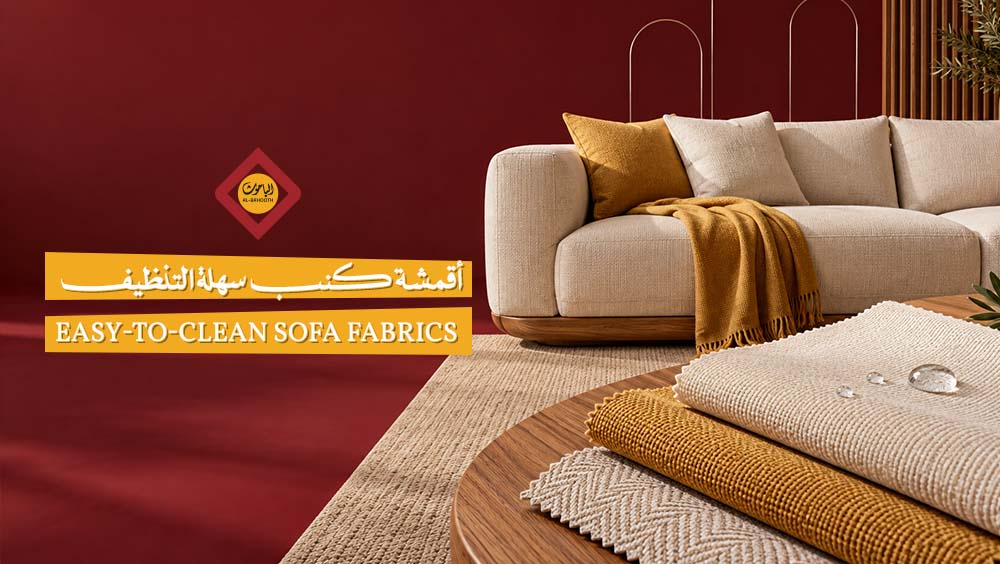
The sofa in any home serves as a daily gathering point, rapidly accumulating traces of frequent use—from food spills to everyday dust. With children or pets in the household, the need for easy-to-clean sofa fabrics becomes impossible to ignore, as not every fabric can withstand repeated exposure to spills and friction without quickly losing its appearance.
However, the material name alone is not enough to judge how easy it is to care for. Fiber composition, weave density, finish type, and moisture absorbency—along with color, pattern, and the attached care symbol—are all factors that actually determine whether a couch fabric is easy to clean. Certain easy-care upholstery fabrics withstand daily use well, provided spills are handled promptly and specific material care instructions are followed. To discuss project requirements and choose a daily-use sofa fabric suited to your home's needs, you can contact AL-Bahooth Store, AL-Bahooth Furnishings Company, to discuss custom manufacturing and receive a suitable price quote.
Easy-to-Clean Sofa Fabrics for Daily Use
Evaluating easy-to-clean sofa fabrics is not tied to a specific trade name or fiber type alone; rather, it is built on a set of actual fabric properties and attached care instructions. Understanding these factors helps in selecting a practical sofa fabric that genuinely fits the daily usage of the space.
1. Factors Influencing Ease of Cleaning
Several elements interplay to determine how easily stains can be removed from upholstery, and looking at a single factor is insufficient to evaluate the fabric:
- Fiber Composition: Determines how the fabric reacts to liquids and dirt.
- Weave Density: Tight weaving reduces dirt penetration into the yarns.
- Surface Finish: Affects how quickly liquids slide off the fabric surface instead of being absorbed.
- Moisture Absorbency Degree: Lower absorption makes it easier to wipe away spills before they leave a mark.
- Fabric Color and Pattern: Darker or multi-colored patterns conceal everyday wear and tear better.
- Stain Type: Some substances are easily removed, while others require different treatment.
- Manufacturer-Specified Cleaning Method: Remains the primary reference for any fabric care procedure.
A fabric that allows easy spill wiping may still stain if left without quick intervention, as letting a spill sit on the surface makes it harder to deal with later. Blotting with a clean cloth is preferred over direct rubbing, and testing any cleaner on an inconspicuous area before applying it to the entire stained area is recommended.
2. Fabric Suitability for Daily Home Traffic
Selecting daily-use upholstery is closely linked to actual traffic flow within the space. Frequent sitting, the presence of children or pets, and recurring spills all elevate the need for easy-care sofas. A family's willingness to perform regular maintenance cleaning is also a deciding factor when choosing fabric type, as some fabrics require more upkeep than others despite easy stain removal.
Fabric Characteristics That Determine Sofa Cleaning Ease
Easy-to-clean sofa fabrics differ from one another based on several factors related to weave structure, surface, and finishing methods, rather than fiber type alone. Two fabrics made of cotton or polyester can perform entirely differently due to variations in sofa weave density and final treatments, making cleaning ease evaluations product-specific rather than material-generic.
1. Fiber Composition and Weave Density
Fiber composition and weave density are among the most prominent factors influencing fabric care ease. High-density, tightly woven fabrics tend to shed dust more easily compared to pile fabrics or raised surfaces that trap dust to a higher degree.
- Tight Weave: Provides a more uniform surface that is easy to clean with simple tools.
- Pile Fabrics: Require extra care as they trap larger amounts of dust between fibers.
- Appropriate Cleaning Tool: A vacuum cleaner with a soft brush attachment is ideal for removing dust from fabric without damaging fibers.
2. Fabric Color, Pattern, and Surface
Patterns can visually conceal some everyday wear, making sofa fabric appear cleaner for longer periods. However, this does not alter actual cleaning methods or recommended care instructions for each fabric, as the care label remains the primary reference regardless of sofa fabric color or pattern.
3. Finish and Moisture Absorbency
A distinction is made between a fabric's ability to quickly wipe off spills and its actual capacity to prevent liquid absorption into fibers. This performance depends on the type of spilled liquid, dwell time on the surface, fabric composition, and final treatment.
Describing a specific material as unconditionally easy-to-clean is inaccurate, as this description depends on individual product specifications and specific care instructions.
Friction Resistance and Daily Use Indicators
A sofa fabric's resistance to daily friction is one of the most critical standards when choosing easy-to-clean sofa fabrics, as it directly relates to fabric suitability for home or office usage intensity.
1. Martindale Test and Abrasion Resistance
The Martindale test measures a fabric sample's resistance to repeated abrasion. The result expresses the number of abrasion cycles a sample endures before visible fabric damage appears. A higher cycle count indicates greater fabric capacity to withstand repeated use.
2. Reading Test Figures and Limits
Some guidelines suggest around 15,000 cycles for lower-traffic residential use and around 20,000 cycles or more for higher-use settings, with additional recommendations citing higher figures for heavy-use areas like public lounges or commercial spaces.
Martindale test methods and result interpretations vary among manufacturers; thus, treating these numbers as indicative guidelines rather than a uniform standard for all upholstery types is recommended:
- Indicative Nature: Displayed figures vary based on the testing body and do not represent a fixed benchmark for all products.
- No Direct Lifespan Indication: High abrasion cycles do not mean a specific usage period or performance guarantee.
- Need for Contextual Comparison: Reading abrasion cycle numbers within the fabric's own specification sheet rather than in isolation from other properties is preferred.
3. Real-World Durability and Care
Abrasion resistance alone is insufficient to fully evaluate sofa fabric durability. Ease of cleaning, weave type, daily usage intensity, and maintenance routines all impact actual long-term fabric performance. Combining these factors creates a more accurate picture of a fabric's suitability for a specific environment—whether quiet residential or high-traffic.
Upholstery specifications and project requirements can be reviewed by contacting AL-Bahooth Store, AL-Bahooth Furnishings Company, to request a price quote outlining available fabric details according to intended usage.
Care Symbols and Stain Cleaning Methods
Sofa care labels feature symbols summarizing fabric handling methods. These are general guidelines, with the product label and manufacturer instructions remaining the main reference point in case of any conflict. Understanding these symbols makes selecting and maintaining easy-to-clean sofa fabrics easier over time.
1. Meanings of W, S, WS, and X Symbols
Each upholstery cleaning symbol directs to a different approach for handling stains and dirt:
- W: Typically indicates cleaning with a water-based cleaner or water foam, while avoiding soaking the fabric with water.
- S: Indicates the use of a water-free solvent cleaner, requiring good ventilation and considering potential color changes if used improperly.
- WS or W/S: Usually permits using both methods according to specific product instructions.
- X: Means clean only by vacuuming or gentle brushing, without using any liquid cleaners on the fabric.
2. Initial Handling of Spills
Acting quickly when a spill occurs reduces the chance of stains setting into the fabric, following a sequential process:
- Remove excess liquid or spilled substance without spreading it over a wider area.
- Blot with a clean cloth instead of rubbing, preventing the stain from pushing deep into the weave.
- Follow the appropriate cleaning method specified by the care symbol on the product label.
- Allow the fabric to air-dry as instructed, without using unrecommended direct heat sources.
Prompt cleaning is helpful at the moment a spill occurs, but the type of stain remains an influential factor. Coffee, oil, or ink stains may require different methods than others, and soap or bleach is not suitable for all fabric types.
3. Testing Cleaners Before Application
Testing any sofa fabric cleaner on an inconspicuous area before applying it to visible stains is recommended, inspecting results after drying to ensure no color or texture change occurs. Care label instructions always take priority over generic guidance, as fabric color, finish, and composition may impose specific cleaning limitations.
Reviewing sofa fabric selection guides aids in understanding the relationship between fabric type and maintenance ease. For more information on furnishing solutions and custom sofa manufacturing based on project requirements, you can contact AL-Bahooth Store, AL-Bahooth Furnishings Company.
Comparing Practical Sofa Upholstery Materials
Sofa upholstery materials differ in how they handle daily use and cleaning. Understanding these differences facilitates choosing easy-to-clean sofa fabrics that suit home or office usage patterns. The comparison covers polyester, synthetic blends, microfiber, and both genuine and synthetic leather, in addition to chenille, cotton, linen, and velvet.
1. Polyester and Synthetic Blends
Polyester is offered as a practical upholstery choice, as it withstands relatively frequent use and is easy to handle during cleaning. However, the presence of polyester in a fabric blend alone does not automatically prove stain resistance.
- Density: Fiber weave tightness affects how well the fabric endures daily friction.
- Finish: Plays a role in how easily surface dirt can be removed.
- Care Symbol: Clarifies suitable cleaning methods for each individual product before adopting any polyester or synthetic blend material.
2. Microfiber and Performance Fabrics
Microfiber is presented among materials designated for daily use, but its performance varies from product to product based on weave composition. Certain performance or treated fabrics combine practical stain handling with continuous friction tolerance, yet they are not immune to staining or the effects of leaving spills uncleaned for extended periods. Referencing care labels and specific fabric specifications remains a necessary step before deciding on appropriate cleaning methods.
3. Genuine Leather and Synthetic Leather
Genuine Leather:
- Can be wiped periodically with an appropriate cloth to maintain its appearance.
- Requires suitable care and may be affected by direct heat or heat sources.
- Cleaners intended for other fabrics should not be used without reviewing product instructions first.
Synthetic Leather:
- Surfaces are often easier to wipe clean compared to other fabrics.
- Proper care remains tied to the specific product type and its individual instructions.
- Should not be confused with genuine leather regarding cleaning or durability characteristics.
4. Chenille, Cotton, Linen, and Velvet
Chenille fabric often combines a soft texture with relatively practical durability, though cleaning ease varies according to weave structure and applied finishes. Cotton and linen may require more careful attention, as their properties are subject to shrinkage, water marks, or color changes based on composition and finish.
- Cotton: Requires careful cleaning to avoid excess water effects on the weave.
- Linen: May experience shrinkage when exposed to unsuitable temperatures or humidity.
- Velvet: Properties vary by fiber type; synthetic velvet is not necessarily identical to cotton or blended velvet. Touch marks or shading variations may appear with pile direction, so gentle treatment following the pile direction according to the care label is preferred.
Offering chenille, velvet, or synthetic fabrics as suitable choices for every home without considering usage nature and specific care requirements is inaccurate.
Frequently Asked Questions
Which material is best for an easy-to-clean sofa?
No single material fits all cases. Specifications for polyester, synthetic blends, microfiber, and synthetic leather are compared according to weave, finish, and fabric care label. The type of use and dirt exposure rate determine the most suitable option among these easy-to-clean fabrics.
How should a stain on sofa fabric be handled?
Blotting the stain with a clean cloth is preferred over rubbing to prevent spreading it into the weave. Steps include referencing the fabric care label and testing the cleaner on an inconspicuous area before full application, keeping in mind that handling methods vary by stain type and material.
How do I select the right sofa fabric cleaner?
The appropriate fabric cleaner is determined by the care symbol and manufacturer instructions, rather than generic fabric descriptions. Some fabrics accept water-based cleaners, others require solvent cleaners, and some instructions restrict care to vacuuming or brushing. Using bleach or soap on sofa upholstery without verifying care labels first is not recommended.
Conclusion
The ease of cleaning easy-to-clean sofa fabrics depends on material specifications, care instructions, and daily usage patterns, rather than the material name alone. Inspecting samples, reviewing specification sheets, and addressing spills promptly help in making an appropriate decision for each case.
Household needs vary regarding dust exposure, friction, color tone, and preferred cleaning methods; therefore, comparing fabrics across these combined factors is preferred over adopting a single material as universally suitable.
To discuss sofa requirements, custom tailoring needs, and request a price quote, you can contact AL-Bahooth Store, AL-Bahooth Furnishings Company, via AL-Bahooth website.