Blackout Curtain Fabric Types and Levels of Light and Heat
Compare blackout curtain fabric types and their levels of light blocking, heat control and privacy for bedrooms, living rooms and office spaces.
Makaseb
October 15, 2026 at 12:49 pm AST
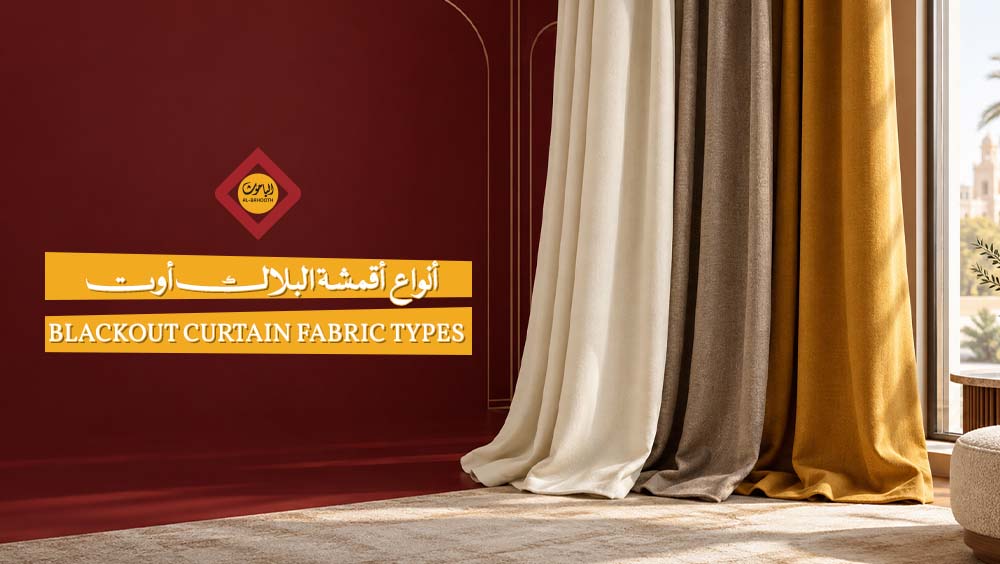
Choosing the appropriate types of blackout curtain fabrics is an essential step toward controlling lighting and enhancing privacy in homes and offices, especially given the variety of blackout materials and the varying degrees of light blockage they provide. Some fabrics rely on light-blocking back coatings, while others feature dense weaves or separate linings, giving each type distinct properties and applications.
In this guide from AL-Bahooth Factory, we review the types of blackout fabrics, the characteristics of each, the difference between dimming levels, their effectiveness in reducing solar heat gain, along with key criteria to help you select the right fabric for any space and the factors influencing price per meter before purchasing.
Blackout Fabric Types and Constructions
The primary classification of blackout fabric types depends on how the light barrier is formed within the fabric itself—whether through a back coating, a dense woven structure, or a separate lining added behind the base fabric. It is worth noting that a multi-layer structure is not always an independent category; it can be part of a coated or woven fabric composition. Understanding this classification helps when selecting a blackout curtain fabric that meets project requirements.
1. Back-Coated Blackout Fabrics
Coated blackout fabrics rely on adding an opaque layer to the reverse side of the textile, which may consist of acrylic, foam, or other polymer compounds. Some fabric constructions of this type feature two or three layers, combining a decorative front face with a functional light-blocking back.
- 2-Pass Coating: A decorative fabric layer paired with a single light-blocking back coating.
- 3-Pass Coating: Incorporates a light layer and a dark layer within the structure; the dark layer blocks light, while the light outer layer reflects a portion of solar radiation according to specific product engineering.
- Applications: Coated blackout fabric suits spaces requiring a distinct decorative exterior combined with light-blocking performance from the back.
2. Dark-Yarn Woven Blackout Fabrics
Woven blackout differs from coated types in how opacity is achieved; here, light blockage is generated through high weave density, dark-colored yarn integration, or a dense inner core between the fabric faces.
- Weave Density: Light blockage level depends on how tightly interlocked and closely packed the threads are.
- Dark Yarn: Integrated directly into the weave structure to reduce light transmission without requiring an external coating.
- Dense Core: An inner layer sandwiched between two fabric faces that enhances opacity while maintaining a uniform appearance on both sides.
Assuming that all woven fabrics block light to the same degree is inaccurate, as opacity depends on weave density and specific yarn specifications.
3. Standard Fabrics with Separate Linings
In this configuration, the main decorative fabric remains independent from the opaque lining installed behind it as a separate layer, which may increase the number of layers and total mass between the room and the window.
- Blackout Lining: Focuses primarily on blocking light regardless of additional functions.
- Thermal Lining: Helps regulate heat transfer alongside its dimming function.
- Light-Backed Lining: Maintains a uniform exterior appearance while providing dimming performance tied to specific product specifications.
4. Multi-Layer Fabric Structures
The descriptor "multi-layer" can apply to both coated and woven fabric constructions, as it refers to the number of layers comprising the fabric rather than a standalone classification. It is important not to confuse a back coating or multi-layer structure with a completely separate category from coated or woven blackout fabrics, as commercial descriptions often overlap depending on each product's formulation and specifications.
Light Blockage Levels in Curtain Fabrics
Curtain dimming levels vary according to the percentage of light penetrating the textile, a distinction completely separate from the material name itself. Knowing blackout fabric types alone is insufficient for determining actual room darkness, as factors related to construction, manufacturing, and window installation also come into play.
1. Total Blackout vs. Partial Dimming
The terms "total blackout" and "partial dimming" describe the amount of light allowed through the fabric face and do not necessarily denote a specific fabric structure or material type. Different textile materials exist within both categories.
- Total Blackout: Indicates an extremely low percentage of light transmission through the fabric surface itself.
- Partial Dimming: Allows a degree of natural light to pass through the fabric while softening its intensity.
- Application: Selecting the appropriate level depends on room function and actual darkness requirements.
2. Light Transmission Through Fabric Weaves
The degree of light passing through fabric is influenced by combined factors, including weave type, applied back coatings, total curtain layer count, and overall manufacturing quality. Requesting light transmission data or measurement methods—when available—is recommended over relying on generic marketing claims of 100% blockage without detailed backing. Product comparisons are most accurate when measurement methods and testing conditions are known, as percentages can vary across different test standards.
3. Light Leakage Around Curtains
Achieving opacity across the fabric surface alone does not guarantee a pitch-black room, as light can leak through areas unrelated to the textile itself:
- Sides: Light can pass through side gaps between curtain edges and the window frame.
- Top and Bottom: Light gaps occur when top or bottom clearances are not tightly covered.
- Sizing and Installation: Overall light blockage relies heavily on proper curtain sizing relative to window dimensions and mounting methods.
Relationship Between Blackout and Solar Heat Reduction
While light blockage levels depend on weave density and construction, solar heat reduction involves additional variables, including layer formulation, lining type, window glass type, and installation methods. Therefore, thermal performance cannot be inferred from light blockage levels alone, as demonstrated by understanding various blackout fabric types and their unique characteristics.
1. Difference Between Light Blocking and Solar Control
Visible light blockage is frequently confused with heat gain control through windows, despite being distinct concepts. A fabric that blocks nearly all visible light will not necessarily deliver identical performance in reducing heat gain, as heat control depends on layer thickness, lining color, and curtain placement relative to glass. Evaluating thermal performance requires reviewing these factors together rather than relying solely on advertised blackout ratings.
2. Impact of Layers, Color, and Linings
Thick multi-layer textiles or fabrics equipped with thermal linings help reduce heat transfer to degrees that vary by product composition, without constituting a guaranteed or uniform performance across all materials. Key factors to consider when evaluating real-world results include:
- Back-Layer Color: Darker colors absorb heat differently than lighter shades, impacting temperature perception inside the room.
- Reflective Light Layers: Incorporating a reflective layer within fabric construction handles solar radiation differently than single-layer fabrics.
- Glass-to-Curtain Clearance: Distance between curtain and glass affects trapped air volume and overall insulation performance.
- Window Frame Coverage: Proper edge coverage reduces heat and light infiltration through side gaps.
These factors make it essential to view thermal blackout or sun-insulating fabrics as products with specific performance metrics rather than a single uniform category.
3. Limits of Curtain Insulation
Dense textiles add a partial barrier against heat and sound transmission, yet they do not replace quality window insulation or HVAC systems. The term "thermal blackout" does not represent a standardized performance benchmark across different products; consulting specific product specifications when comparing choices is recommended to determine suitability for solar heat reduction.
Selecting Blackout Fabrics by Space Application
Choosing appropriate blackout fabric types depends on room function and purpose. What suits a bedroom requiring total darkness differs from living rooms or office environments. Evaluating materials hinges on desired light levels, privacy needs, visual aesthetics, and maintenance tolerance.
1. Blackout Fabrics for Bedrooms
Selecting blackout curtains for bedrooms requires paying close attention to actual fabric opacity and full side coverage around window frames.
- Dimming Degree: Verifying advertised light blockage levels prior to installation is recommended.
- Side Coverage: Extending curtains beyond window frames reduces peripheral light leaks.
- Fabric Limits: Opaque fabric alone cannot prevent light infiltration if sizing and installation methods are neglected.
2. Blackout Curtains for Living Rooms
Choosing sun-insulating curtain fabrics for living rooms requires balancing incoming light control with fabric aesthetics regarding color and pattern.
- Light Control: Medium-to-high opacity levels can be selected based on daily space requirements.
- Visual Aesthetics: Harmonizing fabric color and pattern with room decor is advisable.
- Dual Layering: Pairing opaque blackout layers with sheer sheer curtains provides flexible lighting options throughout the day.
3. Blackout Fabrics for Offices
Selecting office blackout fabrics depends on screen positions relative to windows, glare control needs, and workspace privacy requirements.
- Screen Placement: Window orientation relative to monitors should be considered to minimize reflections and glare.
- Privacy: Opacity levels can be customized to match office work requirements.
- No One-Size-Fits-All: Requirements vary by office layout; no single specification suits all office spaces.
4. Projection and Media Room Requirements
Labels like "projector blackout" may denote commercial usage or specific product applications rather than a distinct fabric construction category. Reviewing product specifications and mounting guidelines before selecting fabrics for projection rooms is recommended, as specifications vary between manufacturers.
No single material suits all room types; selecting the right blackout fabric depends on spatial demands, sizing, curtain appearance, and required light blockage specifications.
Purchasing Specifications and Blackout Fabric Price Per Meter
Comparing blackout fabric types requires reviewing complete technical specifications before evaluating price per meter, as fabric cost alone does not reflect final curtain expense or installed performance.
1. Essential Specifications to Clarify
Defining fabric specifications accurately enables fair comparisons across available choices and prevents confusion between materials with differing performance and finishes:
- Construction Type: Clarifying whether fabric is back-coated, dense-woven, or lined with a separate blackout backing.
- Blockage Rating: Setting required light blockage levels appropriate for space usage.
- Backing Layer: Confirming the presence and type of backing layer and its effect on performance.
- Face Aesthetics and Finish: Specifying face appearance and required finishing style.
- Care Instructions: Reviewing care guidelines suitable for each fabric type.
Requesting clarification on whether light transmission or thermal performance data applies to the fabric alone or the complete curtain system is recommended, as mismatched data should not be compared directly.
2. Calculating Fabric, Lining, and Installation
Required blackout fabric yardage depends on window dimensions and curtain design rather than window surface area alone:
- Window Dimensions: Base length and width form the baseline for yardage calculations.
- Pleating Style: Pleats or folds directly impact required fabric quantity.
- Coverage Scope: Defining full or partial window overlap.
Accurately measuring window spaces and defining scope prior to approving price quotes ensures material quantities align with actual project needs.
3. Pricing and Requesting Quotes
Price per meter for blackout fabric is determined by fabric specifications, total quantity, and custom tailoring or installation requirements included in the offer, without being tied to a fixed baseline figure or predefined execution timeline. AL-Qassim Furniture Factory provides local manufacturing capabilities and custom tailoring according to need, while AL-Bahooth Store, AL-Bahooth Furnishings Company offers furnishing and interior design solutions tailored to fabric specs, quantity, and finishing suitable for every space. Price quotes can be requested to discuss spatial requirements directly and select the best blackout fabric option available.
Frequently Asked Questions
1. What are the types of blackout fabrics?
Blackout curtain materials fall into three main categories: light-blocking back-coated fabrics, high-density or dark-yarn woven fabrics that reduce light transmission, and standard fabrics paired with a separate blackout lining mounted behind them.
- Coated Fabrics: Feature a backing layer that directly blocks light pass-through.
- Dense Woven Fabrics: Rely on weave density or dark internal yarns to diminish light.
- Lined Fabrics: Combine standard face textiles with added rear blackout linings.
It is worth noting that multi-layer structures can appear across more than one of these categories within a single product.
2. What is blackout fabric?
Blackout fabric is a textile or curtain system engineered to restrict light transmission using back coatings, dense weaving, or added blackout linings. Dimming degrees vary by product, and light may still leak around curtain margins even with opaque materials.
3. How much does blackout fabric cost per meter?
Determining price requires knowing requested fabric specifications, yardage quantity, window measurements, and custom tailoring requirements for each project. AL-Qassim Furniture Factory provides local manufacturing and custom tailoring based on need, while AL-Bahooth Store, AL-Bahooth Furnishings Company allows project requirement discussions through price quote requests specifying exact details.
Conclusion
Blackout fabric types vary between coated fabrics, tightly woven textiles, and separate-lined options, each possessing distinct light dimming and absorption properties. However, blackout degree alone is insufficient for judging a fabric's ability to reduce solar heat gain, as additional variables govern actual curtain performance.
When making a selection, reviewing weave structure, backing layers, light transmission data, and attached care guidelines is recommended. Paying attention to curtain dimensions and window frame coverage is equally vital, as both directly govern real-world darkness levels inside the space.
AL-Qassim Furniture Factory can be contacted to discuss local curtain manufacturing and custom tailoring based on project needs, while AL-Bahooth Store, AL-Bahooth Furnishings Company can be reached to explore furnishing and interior design solutions tailored to target space specifications.
Understanding blackout fabric types remains a foundational step before making a purchasing decision, along with reviewing fabric specifications, dimming levels, and lining types to ensure curtains align seamlessly with residential or commercial space requirements.