Chipboard Wall Cladding: Features, Applications, & Trends
Explore how chipboard wall cladding offers a cost-effective, sustainable, and customizable solution for interior finishes in Saudi Arabia. Learn more with AL-Bahooth.
Makaseb
September 10, 2025 at 6:24 pm AST
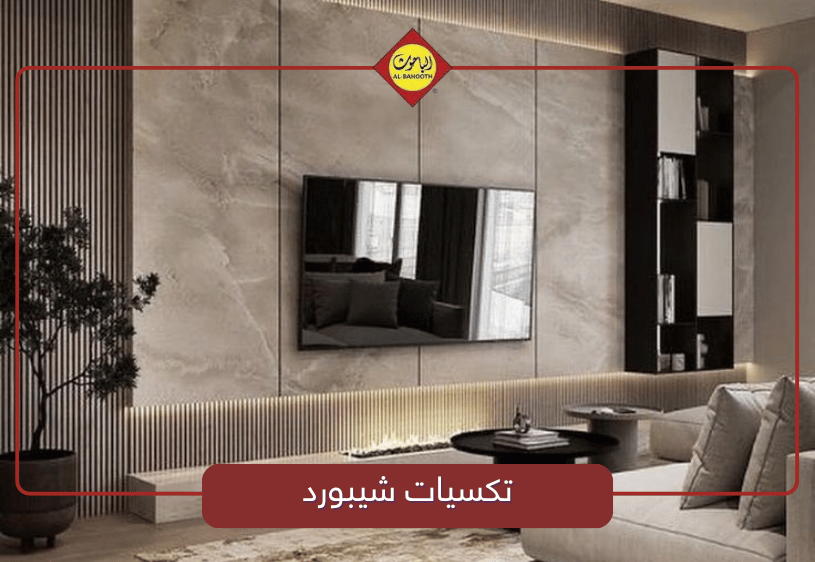
Chipboard cladding has evolved from a secondary construction material into a central element of modern interior design. Driven by the demand for solutions that combine aesthetic appeal, flexibility, and cost efficiency, chipboard cladding meets the functional and decorative needs of contemporary architectural projects across Saudi Arabia and the broader region.
This article examines chipboard wall cladding, its material composition, primary applications, design trends, comparative advantages, and implementation strategies.
What Is Chipboard Wall Cladding?
Chipboard wall cladding consists of engineered panels manufactured from wood chips, sawdust, and recycled timber fibers. These raw materials are bound together using synthetic resins under high temperature and mechanical pressure to yield structural panels of controlled density and thickness.
Following base pressing, the surface of the panel is frequently finished with protective laminates—such as melamine or High-Pressure Laminate (HPL)—to enhance scratch resistance, moisture defense, and decorative appeal. Manufactured in various sizes and thicknesses, chipboard panels allow for straightforward cutting, shaping, and rapid on-site installation.
Key Components
- Core Substrates: Compressed wood particles and fibers that provide structural body and rigidity.
- Synthetic Resin Binders: Formaldehyde or urea-based resin systems that bind particles into a solid core.
- Decorative Surface Layers: Melamine or HPL laminates that protect the core while providing visual texture.
- Versatile Surface Finishes: Matte, high-gloss, or textured finishes replicating natural timber or marble grains.
Primary Applications of Chipboard Cladding
Wall Cladding & Ceiling Systems
Chipboard panels provide smooth, uniform surfaces across interior walls and suspended ceilings. They effectively conceal structural irregularities, hide electrical conduits, and support recessed architectural lighting.
Furniture Manufacturing & Cabinetry
Due to its ease of machining and cost efficiency compared to solid timber, chipboard is widely used across residential joinery:
- Kitchen cabinetry and upper storage units.
- Built-in bedroom wardrobes and closet systems.
- Wall-mounted display shelving and TV backdrop units.
- Modern bed frames and modular storage structures.
Subflooring & Interior Partitions
In specific interior build-outs, chipboard serves as a subfloor leveling layer or as temporary partition walls to divide large open-plan spaces cleanly and efficiently.
Commercial & Retail Projects
Commercial offices, hotels, and retail showrooms utilize chipboard cladding for space-dividing partitions, display fixtures, reception counters, and feature walls requiring modern finishes within defined project budgets.
Advantages of Chipboard Wall Cladding
Structural Balance & Practicality
Chipboard offers suitable density for moderate-duty interior applications. When finished with quality protective edge-banding and surface laminates, it maintains its structural integrity over years of regular indoor use.
Environmental Sustainability
By utilizing recycled timber byproducts and wood scraps, chipboard production reduces reliance on virgin timber extraction. This aligns with environmental conservation goals and sustainable building frameworks, such as Saudi Arabia's Vision 2030 initiatives.
Extensive Customization
Chipboard panels accept a broad spectrum of surface colors, textures, and geometric prints. They can be precisely cut and edged to fit bespoke interior layouts, ranging from minimalist modern aesthetics to traditional designs.
Cost Efficiency
Compared to solid timber, plywood, or heavy stone facing, chipboard remains one of the most budget-friendly materials available, making high-end interior finishes accessible across large-scale projects.
Limitations & Practical Challenges
Moisture Sensitivity
Direct exposure to standing water or high ambient humidity can cause raw chipboard cores to swell or warp. To mitigate moisture ingress, all exposed panel edges must be sealed with protective edge-banding, and surfaces should be laminated with water-resistant films, particularly near kitchens or utility areas.
High-Traffic Wear
In high-traffic public corridors or heavy commercial environments, unreinforced chipboard surfaces may show impact marks or surface wear sooner than solid wood or solid-core composites.
Importance of Proper Installation
Improper installation or unsealed cut edges leave panels vulnerable to chipping, edge peeling, and moisture absorption. Experienced technicians should perform fitting to ensure seamless alignment and long-term joint stability.
Material Comparison
Chipboard Cladding
- Cost: Very low and budget-friendly.
- Density & Strength: Medium density, suited for decorative and light applications.
- Moisture Resistance: Low, requires proper sealing and laminating.
- Ease of Machining: High, very easy to cut and shape.
- Weight: Lightweight and easy to handle.
Medium-Density Fiberboard (MDF)
- Cost: Moderate.
- Density & Strength: Medium to high density with uniform strength.
- Moisture Resistance: Moderate resistance compared to raw chipboard.
- Ease of Machining: High, allows for smooth edges and routing.
- Weight: Medium weight.
Plywood
- Cost: Moderate to high.
- Density & Strength: High structural strength due to cross-laminated layers.
- Moisture Resistance: High, performs well in humid environments.
- Ease of Machining: Moderate, requires sharp cutting tools to avoid splintering.
- Weight: Medium to heavy.
Solid Wood
- Cost: High investment.
- Density & Strength: Very high density and natural structural integrity.
- Moisture Resistance: Moderate, requires regular treatment and maintenance.
- Ease of Machining: Requires specialized carpentry and skill.
- Weight: Heavy.
Modern Design Trends in Saudi Arabia
Sustainable Sourcing & Eco-Conscious Building
In line with regional sustainability goals, designers are increasingly selecting chipboard panels manufactured from certified recycled wood content. This approach minimizes raw material waste without sacrificing spatial quality.
Fusing Modernity with Regional Heritage
Contemporary interior design in Saudi Arabia frequently integrates traditional motifs with modern panel finishes. Designers utilize digital printing and CNC routing on chipboard surfaces to reproduce intricate Najdi geometric patterns or rich colors inspired by Asiri wall art alongside sleek, modern lighting.
Smart Manufacturing & Digital Precision
The integration of Computer Numerical Control (CNC) cutting, digital surface printing, and anti-bacterial surface treatments allows chipboard panels to achieve high design accuracy, realistic marble or wood grain textures, and improved hygiene performance in commercial spaces.
Selection & Maintenance Guidelines
Selection Criteria
- Assess Moisture Levels: Choose moisture-resistant laminated variants for installations near kitchens or humid interior zones.
- Select Core Density Based on Load: Use higher-density panels for load-bearing shelving or heavy cabinet carcasses, reserving lighter boards for decorative wall cladding.
- Match Decorative Finishes: Select melamine, HPL, or wood-grain veneers that complement the overall interior color scheme and floor finishes.
- Factor in Long-Term Value: Balance initial material costs against durability requirements to select the right specification for the space.
Installation & Care Tips
- Seal All Cut Edges: Apply high-quality PVC or ABS edge-banding to every cut panel side to block ambient moisture absorption.
- Avoid Direct Water Exposure: Wipe off liquid spills immediately and avoid installing unsealed chipboard in direct splash zones.
- Use Proper Fasteners: Employ specialized coarse-thread wood screws or structural mounting brackets designed specifically for composite boards.
- Professional Fitting: Engage qualified installers for large-scale wall cladding to ensure plumb lines, neat corner joins, and hidden mechanical anchor points.
Tailored Solutions by AL-Bahooth Furniture
Founded in 1395 AH (1976 CE) by Ahmed Suleiman Ali AL-Bahooth, AL-Bahooth Furniture offers integrated interior design and custom fabrication through Qassim Furniture Factory. Incorporating imported materials and local manufacturing, AL-Bahooth provides tailored chipboard cladding and furniture solutions for residential and commercial environments.
AL-Bahooth delivers end-to-end service—from initial consultation and 3D design visualizations to digital fabrication and on-site assembly. By combining chipboard paneling with complementary accents like metal inlays, glass features, and built-in lighting, AL-Bahooth ensures every project balances durability, cost efficiency, and refined aesthetic quality.
Frequently Asked Questions
Is chipboard cladding completely waterproof?
No, chipboard is not naturally waterproof. However, panels coated with protective melamine or HPL laminates and fully sealed along their edges offer good resistance to ambient humidity and indirect moisture. Direct contact with standing water should be avoided.
Can chipboard panels be used in kitchen environments?
Yes, chipboard is widely used for kitchen cabinet doors and outer cladding, provided the panels are positioned away from direct water streams and sealed thoroughly with quality edge-banding.
Is chipboard wall cladding an eco-friendly material choice?
Yes, chipboard is considered environmentally responsible because it is primarily manufactured from recycled wood fibers, sawdust, and forest thinnings, maximizing natural resource utilization.
Conclusion
Chipboard wall cladding provides a practical, economical, and aesthetically flexible solution for modern interior spaces. With a broad range of surface finishes, simple installation requirements, and strong alignment with sustainable building practices, it remains a valuable option for residential homes, corporate offices, and retail environments across the region.