Coworking Spaces: Flexible Workspaces for Collaboration & Growth
Explore coworking spaces tailored for flexibility, networking, and productivity. Discover types, key benefits, global trends, and custom furnishing solutions.
Makaseb
August 19, 2025 at 5:33 pm AST
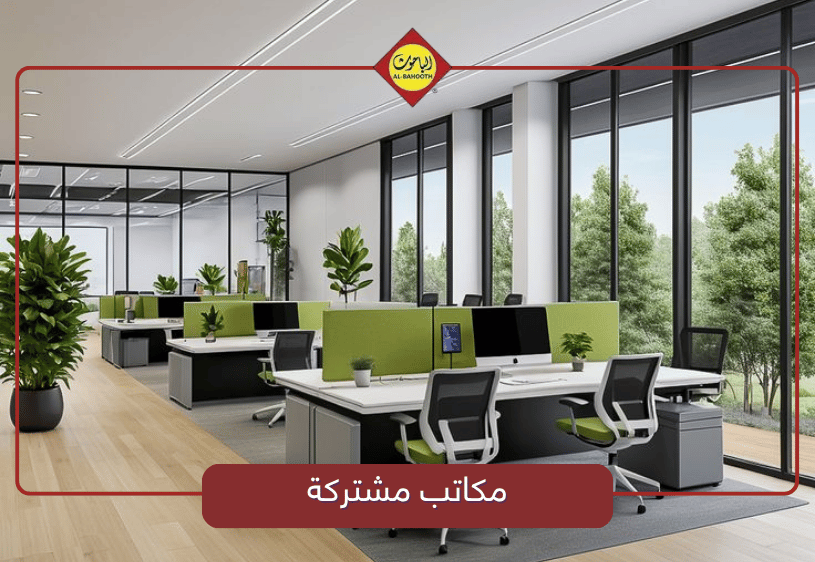
Recent years have witnessed a major transformation in the work environment with the increasing spread of the concept of coworking spaces, which now provide professionals and entrepreneurs with a flexible work environment responding to their modern needs. In a world characterized by competitiveness and rapid change, coworking spaces have become a dynamic, service-rich environment, offering greater opportunities for communication, collaboration, and remarkable productivity without the constraints of traditional infrastructure.
What Are Coworking Spaces?
Coworking spaces are known as flexible work environments allowing individuals and companies to conduct their business within a single space, whether independently or collaboratively, in exchange for a subscription fee or short-term lease. With this pattern, users avoid high costs and commitments associated with traditional office contracts, gaining greater freedom in choosing the work space and duration of presence.
These spaces attract a diverse spectrum of users including freelancers, startups, small and medium-sized enterprises, and even sub-teams within major corporations. This work environment supports productivity through integrated infrastructure such as high-speed internet, meeting rooms, printing and copying services, lounge areas, and coffee corners. They also offer opportunities to participate in community events to enhance professional communication and partnerships.
What Types of Spaces Are Available?
- Open Offices (Hot Desks): Allow you to sit anywhere available within the space according to your desire and daily need, with high flexibility in usage.
- Dedicated Desks: Grant you a fixed desk inside the space, where you can keep your work supplies daily, ideal for those seeking continuity in the location.
- Team Private Offices: Provide an enclosed area that a team or small company can use exclusively, enhancing privacy and effective collaboration.
Membership options and contracts range between daily, weekly, monthly, and yearly to suit various needs and the extent of required commitment. This diversity comes amidst the accelerated global expansion of coworking spaces, where demand increases with the rising remote work culture and trends of a flexible and diverse economy.
What Are the Advantages of Coworking Spaces?
Coworking spaces enhance productivity by providing a professional, equipped, and designed environment that considers user comfort and focus details. Away from home office distractions, individuals benefit from quiet areas dedicated to focus or collaborative spaces stimulating interaction as desired, directly reflecting on the quality and speed of task completion. Experiences show that work teams and freelancers experience a noticeable improvement in their productivity levels when moving to this environment, especially in reducing interruption periods and increasing focus.
Regarding costs, coworking spaces offer solutions that are more flexible and less financially burdensome than traditional leasing. Thanks to memberships allowing facility usage fully or partially as needed, you can avoid high expenses such as buying furniture or paying construction costs and basic utilities like internet and printing. For instance, a small team can benefit from a monthly package in a coworking space without any prior setup cost or commitment to long-term contracts.
The value of coworking spaces also manifests in expanding professional relationship networks through:
- Organizing periodic events and gatherings providing direct communication opportunities between project owners and professionals.
- Encouraging processes of exchanging experiences and knowledge among space users.
- Promoting the conclusion of new business deals between entrepreneurs.
- Supporting the emergence of innovative partnerships thanks to the convergence of diverse interests and experiences under one roof.
These shared spaces also play an indirect role in supporting a life balance; helping you establish a clear separation between work time and personal life, and allowing you to build a healthy daily routine away from the isolation of home working or exhaustion resulting from the absence of boundaries between your professional and private roles.
Who Uses Coworking Spaces?
- Freelancers and individual entrepreneurs find a sanctuary in coworking spaces that rescues them from the isolation of home working, providing an integrated work environment without bearing the massive operational costs associated with renting a private office or establishing a permanent headquarters. Thanks to shared resources and facilities allowed by these offices, freelancers can focus on their business and develop their projects in stimulating atmospheres.
- Startups benefit from coworking spaces by providing a dynamic environment encouraging team growth and collaborative work, allowing flexibility to scale space up or down according to requirements and team size at each growth stage, while reducing long-term financial commitments.
- Remote employees and expats looking for professional work headquarters equipped with the latest technologies use these spaces to escape isolation and join a multi-disciplinary community enhancing professional interaction.
- Large organizations sometimes resort to coworking spaces as dedicated innovation spaces or temporary locations for project teams or subsidiary departments, facilitating project management and reflecting rapid response to market changes.
How Have Coworking Spaces Evolved Globally?
Coworking spaces began emerging during the first decade of the new millennium in both America and Europe, responding to the need of entrepreneurs and freelancers for a collaborative, open work environment outside traditional corporate molds. The spread of remote work culture and rising traditional rents quickly accelerated the adoption of this pattern globally, alongside the development of digital collaboration technologies and increasing awareness of the benefits of flexibility in the business environment.
A number of global operators left a clear mark on the expansion and spread of the coworking space concept, including WeWork, Industrious, Regus, Mindspace, and Servcorp, all establishing global influence and diverse offerings.
Technology greatly impacted coworking space trends, helping customize spaces and meet specific customer needs, expanding into specialized areas such as:
- Setting up creative studios allowing professionals and artists to collaborate and produce innovative works.
- Providing dedicated podcast rooms with high technical equipment facilitating recording and broadcasting.
- Designing quiet areas providing an environment suitable for focus and achievement away from noise.
- Offering desks targeted to specific groups, such as offices directed to women, tech communities, or artists.
Modern technologies, whether via electronic security solutions or smart applications, played core roles in improving user experience and ensuring the protection of data and business of companies and individuals within these shared spaces.
What Are the Services of Coworking Spaces?
- Flexible workstations (Hot Desks) allowing you to work in open offices bookable daily or as needed.
- Dedicated or private desks meeting the needs of users or teams preferring a fixed, permanent workspace within a shared environment.
- Meeting rooms and conference halls equipped with modern technologies for successful presentations and major meetings.
- High-speed internet and reliable wireless networks ensuring constant connection and smooth daily work.
- Integrated printing, copying, and scanning services to facilitate document and paperwork management without leaving the place.
- Lounge areas, entertainment spaces, coffee corners, or small kitchens providing comfortable atmospheres for relaxation and communication.
- Mail reception and virtual telephone calling (secretariat), supporting professional communication and business management even in your absence.
- Social events, training courses, and professional workshops to enhance relationship networks and develop skills.
- Specialized zones like quiet rooms or creative studios supporting special work needs, whether for focus or media production.
- Digital security systems and smart key/app operation, with technical support to ensure a secure, smooth experience.
- Professional furnishing solutions from AL_Bahooth to design and equip office spaces on demand, with local manufacturing quality keeping pace with modern corporate requirements.
Frequently Asked Questions About Coworking Spaces
Do coworking spaces suit beginners? Coworking spaces are ideal for beginners and entrepreneurs, allowing them to benefit from a high degree of flexibility, a community support rich in experiences, and low-cost packages. You can access diverse resources without entering operational complications or administrative commitments.
What are the security and privacy protection advantages? Electronic security in coworking spaces has risen noticeably; many rely on private networks to guarantee connection protection and advanced electronic entry systems to control access to shared areas. Some operators hold global security certificates assuring clients of data protection.
How do I find a space close to me? You can use global and local electronic platforms to easily search for coworking spaces near your geographical location, browsing all services and advantages offered by each space in detail.
Conclusion
Coworking spaces have become an integral part of the modern work environment, providing high flexibility and supporting collaborative work through equipped infrastructure and an environment stimulating interaction and professional development. This transformation reinforced the presence of coworking spaces as a primary destination for ambitious individuals and entrepreneurs seeking evolution and new opportunities.