Equipping Government Offices | Saudi Standards & Smart Design
Discover essential standards for equipping government administrative offices in Saudi Arabia, covering SBC compliance, energy efficiency, smart layouts, and custom furniture.
Makaseb
October 20, 2025 at 3:03 pm AST
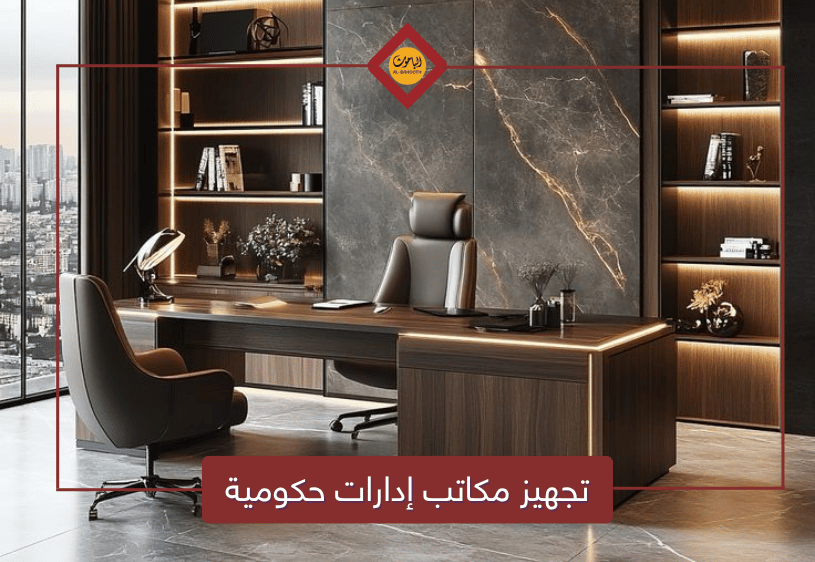
Equipping government administrative offices represents a vital cornerstone in advancing the public sector working environment across the Kingdom of Saudi Arabia. Institutional success relies heavily on office efficiency and workplace comfort—the very spaces where public policies are crafted and daily administrative services are executed. Modernizing a government office is no longer limited to simple furniture procurement; it is a holistic architectural process guided by national building codes, design aesthetics, and smart technological integration aimed at maximizing productivity and workflow fluidity.
This comprehensive guide is designed for public sector officials, project managers, and procurement specialists seeking a methodical understanding of the engineering standards, regulatory frameworks, and interior design trends governing public sector office outfitting in Saudi Arabia.
Defining Government Office Outfitting and Its Strategic Scope
Equipping government administrative offices involves organizing physical space to foster operational efficiency, employee well-being, and seamless communication. The objective is to achieve a balance between functional ergonomics and visual prestige, creating a spatial layout tailored to department workflows, executive receptions, secure record storage, and conference facilities.
The Phased Outfitting Lifecycle:
- Needs Assessment and Workflow Analysis: Evaluating spatial requirements, employee headcount, security protocols, and inter-departmental movement patterns.
- Spatial Planning and Interior Architecture: Developing floor plans, spatial zoning, and interior concepts that embody institutional identity.
- Material Sourcing and Procurement: Selecting certified, durable building materials and furniture adhering to Saudi government procurement standards.
- Site Execution and MEP Integration: Managing fit-out construction, electrical wiring, HVAC installation, and telecommunications under technical supervision.
- Quality Inspections and Handover: Conducting rigorous quality audits to ensure compliance with national engineering codes prior to official facility handover.
Saudi Building Code Compliance and Workplace Health Standards
Public sector office outfitting in Saudi Arabia is strictly governed by the Saudi Building Code (SBC) issued by the Saudi Standards, Metrology and Quality Organization (SASO). These standards establish baseline environmental and spatial requirements for public facilities:
- Spatial Allocation Standards: Every employee must be allocated a minimum dedicated workspace of 18 square meters to accommodate desks, storage units, and comfortable circulation paths.
- Hazardous Material Bans: Absolute prohibition of asbestos or harmful chemical compounds in wall insulation, ceiling tiles, or finishes to safeguard occupant health.
- Slip-Resistant Heavy-Duty Flooring: Flooring materials must be non-slip, easy to clean, and rated for continuous heavy foot traffic.
- Acoustic Separation: Specialized soundproofing for doors and partition walls to reduce environmental noise and protect discussion confidentiality.
- Indoor Air Quality and Thermal Control: Advanced HVAC systems must maintain ambient indoor temperatures below 25°C while ensuring continuous fresh air circulation and balanced natural/artificial lighting.
- SASO-Certified Furniture: All furniture units must meet SASO durability and ergonomic certifications, featuring adjustable mechanisms tailored to specific administrative roles.
Energy Efficiency and Smart Spatial Architecture
Equipping modern government offices heavily emphasizes energy conservation to reduce municipal utility costs and support environmental targets:
- Thermal Insulation: Dual-pane windows and insulated exterior walls minimize thermal transfer, reducing cooling loads on HVAC equipment.
- Smart Climate Controls: Automated HVAC management systems utilize occupancy sensors and real-time thermostats to optimize cooling output.
- Intelligent LED Lighting: Energy-saving LED arrays integrated with daylight-harvesting sensors adjust illumination levels automatically based on natural light.
The Impact of Smart Spatial Planning:
Smart spatial design optimizes office layouts to mirror daily operational workflows. By reducing physical travel distances between workstations, central filing archives, and print stations, administrative procedures move faster with fewer physical bottlenecks.
Productivity, Ergonomic Comfort, and Custom Furniture
A well-designed government office directly influences administrative output and employee well-being:
- Enhanced Inter-Departmental Collaboration: Strategic spatial zoning places interdependent teams adjacent to one another, shortening communication cycles and accelerating decision-making.
- Ergonomic Stress Reduction: Ergonomic task chairs, neutral color palettes, and natural light exposure lower physical strain, reduce absenteeism, and boost daily focus.
- Custom Bespoke Furniture: Tailor-made workstations allow departments to configure storage, desk heights, and privacy screens around their specialized job functions. Empirical data across public institutions indicates that transitioning to adaptable, custom office modules yields measurable improvements in spatial utilization and internal coordination.
Governance, Inspections, and Multi-Agency Approvals
Executing a government office fit-out requires rigorous oversight across all project phases:
- Licensed Engineering Supervision: Projects are managed by certified engineering consultancies and registered contractors to ensure absolute adherence to official project blueprints.
- Pre-Installation Material Testing: Materials and tech components undergo laboratory testing before site installation to verify SASO compliance.
- Progress Audits and Documentation: Periodic milestone inspections generate official compliance reports tracked by supervisory committees.
- Final Approval Bodies: Official sign-off requires joint approval from the project owner (the host government agency), the Ministry of Finance, and SASO.
Supply Chain Challenges and Mitigation Strategies
Government outfitting projects often face logistical and operational hurdles:
- Freight Costs and Market Volatility: Global shipping fluctuations and rising raw material costs can strain pre-allocated municipal budgets and delay delivery timelines.
- Labor Shortages: A shortage of specialized fit-out technicians can slow down custom assembly across large multi-story office complexes.
- System Integration Complexity: Coordinating electrical wiring, IT networking, furniture assembly, and HVAC ducting requires precise synchronization to avoid rework.
Strategic Risk Mitigation:
- Comprehensive Upfront Planning: Developing detailed project roadmaps that account for supply chain buffer times and material price contingencies.
- Automated Inventory Tracking: Implementing digital logistics software to monitor furniture storage, shipping status, and site assembly in real time.
- Sustainable Procurement Policies: Utilizing recyclable materials, high-durability furniture, and SASO-certified eco-friendly suppliers to lower lifetime maintenance costs.
- Professional Workforce Training: Investing in specialized project management training to ensure site supervisors can manage complex public fit-outs efficiently.
Industry Leadership: AL-Bahooth Furniture
Since 1976 CE (1395 AH), AL-Bahooth Furniture has served as a premier provider of government office outfitting solutions across Saudi Arabia. The company combines deep local manufacturing heritage with comprehensive interior design capabilities to create functional, prestigious administrative environments:
- Integrated Interior Architecture: Providing spatial layouts, color schemes, and workflow-optimized partition designs that align with each agency's brand guidelines.
- Custom Domestic Manufacturing: Powered by its dedicated production hub, Qassim Furniture Factory, AL-Bahooth manufactures heavy-duty executive desks, modular workstations, and specialized storage solutions tailored to public sector requirements.
- Smart Storage Solutions: Engineering high-density filing systems and secure archival cabinetry that maintain neat office aesthetics while offering rapid document access.
- Turnkey Execution: Providing complete end-to-end management—from initial 3D design modeling and spatial consultation to site delivery, assembly, and long-term post-sale technical support.
Frequently Asked Questions
1. What constitutes an administrative office within a public sector entity?
An administrative office is a core operational unit within a public organization where daily municipal tasks are managed, public services are coordinated, and executive decisions are finalized. It requires an optimized environment that supports administrative focus and inter-departmental communication.
2. Why is custom furniture preferred for government office outfitting?
Custom furniture ensures maximum space utilization, perfectly fitting specific room dimensions and utility layouts. It provides heavy-duty build quality tailored to intensive daily public sector use while embodying the institutional branding of the hosting agency.
3. What role does institutional visual identity play in office outfitting?
Integrating institutional logos, official color schemes, and refined architectural finishes fosters employee belonging and creates a professional impression for visiting citizens and international delegations, reinforcing the authority and modern culture of the government entity.
Conclusion
Equipping government administrative offices is an integrated architectural journey that connects precise engineering concepts with long-term operational execution. By adhering to the Saudi Building Code, prioritizing energy efficiency, incorporating ergonomic custom furniture, and engaging experienced domestic manufacturers, public sector entities create secure, productive, and modern working environments that support the Kingdom's institutional development goals.