Furnishing Contractors for Major Government Projects: Scope & Execution
Examine how specialized contractors deliver turnkey furnishing for major government projects in Saudi Arabia, aligning with SASO standards and Vision 2030.
Makaseb
November 6, 2025 at 3:43 pm AST
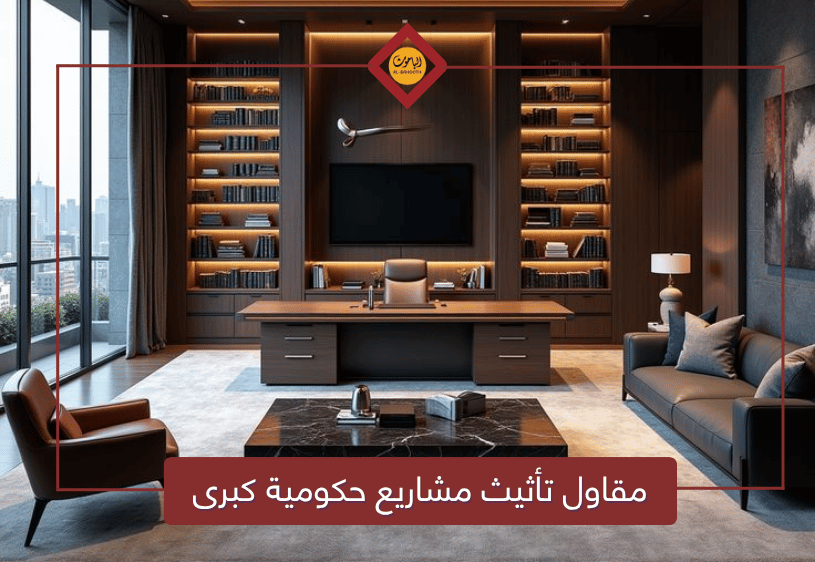
In an era defined by mega-infrastructure initiatives and national development under Vision 2030, a specialized furnishing contractor for major government projects serves as a strategic partner. Transforming bare architectural spaces into fully operational, high-efficiency environments requires blending local manufacturing, authentic craftsmanship, and extensive technical expertise. Managing end-to-end government furnishing contracts demands rigorous adherence to regulatory standards, supply chain management, and integrated spatial planning.
Partnering with experienced furnishing specialists like AL-Bahooth ensures seamless execution across large-scale public sector developments. Contact AL-Bahooth through the official portal to review project specifications, explore manufacturing capabilities, and request technical proposals.
Market Dynamics and Regulatory Requirements in Saudi Arabia
Government furnishing contracts across the Kingdom of Saudi Arabia are governed by strict procurement frameworks and quality standards designed to ensure operational efficiency and long-term durability.
1. Scale and Scope of Mega Government Projects Driven by Saudi Vision 2030, public sector spending has expanded across new urban developments, municipal infrastructure, administrative headquarters, and specialized facilities. These projects demand comprehensive, large-scale furnishing solutions. Managing these environments requires specialized contractors capable of delivering commercial-grade furniture that withstands high-traffic operational demands.
2. Contractual Frameworks and Turnkey Responsibilities Government furnishing projects operate under the Saudi Government Procurement and Tenders Law. Common contracting structures include:
- Turnkey Contracts (EPC/Design-Build): Encompass complete space planning, material sourcing, fabrication, delivery, installation, and final testing.
- Strict Material Approvals: Mandate full compliance with official material samples, color palettes, and finish specifications approved by government oversight committees.
- Contractual Accountability: Place complete responsibility on the primary contractor for quality assurance, timeline adherence, and post-delivery maintenance.
3. SASO Compliance and Technical Quality Standards Furnishing major public facilities requires strict coordination with the Saudi Standards, Metrology and Quality Organization (SASO). Technical evaluations focus on:
- Structural ergonomics, load capacity, and fire safety ratings.
- Material sustainability, wear resistance, and ease of maintenance.
- Seamless integration with smart building infrastructure, IT cable management, and AI-enabled office hardware.
The Contractor Lifecycle: Qualification to Post-Delivery
Managing a major public sector furnishing project involves three core phases: bidding and pre-qualification, design and execution, and final handover with long-term support.
1. Pre-Qualification and Tender Submission The procurement journey begins with rigorous tender document analysis:
- Scope Evaluation: Determining whether the tender specifies a turnkey package or phased supply contract.
- Technical Proposal: Submitting detailed material datasheets, fabrication schedules, mock-up samples, and compliance certificates.
- Commercial Bid: Providing itemized pricing structures aligned with government budget guidelines.
- Past Performance Verification: Demonstrating a proven track record of completing large-scale public contracts on schedule.
2. Planning, Interior Design, and On-Site Execution Upon contract award, the contractor enters the technical implementation phase:
- Traffic Flow and Spatial Layouts: Designing floor plans that optimize employee movement and administrative workflows.
- Material Sourcing and Warehousing: Managing secure storage and inventory control prior to site delivery.
- Cross-Trade Coordination: Aligning installation schedules with main civil contractors, MEP (Mechanical, Electrical, Plumbing) teams, and IT installers to avoid delays.
3. Inspection, Handover, and Post-Delivery Warranty Following installation, the contractor conducts joint inspections with government project managers:
- Final Inspection Protocols: Verifying that all delivered items match approved submittals and technical specifications.
- Documentation Submission: Delivering as-built drawings, material certificates, user manuals, and warranty documentation.
- User Training & Maintenance Plans: Providing administrative staff with operational guidance and establishing routine preventative maintenance schedules.
Strategic Advantages and Value Addition
Selecting an established prime contractor like AL-Bahooth provides public sector entities with streamlined project execution and reduced administrative oversight.
1. Integrated Fabrication and Supply Network AL-Bahooth distinguishes itself through robust local manufacturing capabilities, structured supply chains, and specialized project management teams. By controlling fabrication quality and delivery schedules internally, project risks associated with imported materials and supply disruptions are minimized.
2. Operational Benefits for Government Entities Entrusting large-scale projects to a single specialized contractor yields measurable efficiency gains:
- Single-Point Accountability: Reduces administrative coordination time for public project managers.
- Technical Harmony: Ensures furniture design integrates fully with power distribution, lighting, and acoustic treatments.
- Long-Term Cost Optimization: High-grade local manufacturing reduces lifecycle maintenance costs and future replacement expenses.
Risk Mitigation and Operational Challenges
Navigating major public sector furnishing contracts involves addressing logistical, financial, and operational challenges through proactive project management.
1. Supply Chain and Logistical Management
- Customs and Transit Delays: Mitigated by relying on local manufacturing capacity and maintaining buffer inventories.
- Scope Modifications: Addressed by establishing clear variation-order procedures within the primary contract.
- Inter-Contractor Scheduling: Managed through weekly on-site coordination meetings with master developers and MEP engineers.
2. Financial and Contractual Compliance
- Fluctuating Material Costs: Managed through fixed-price supplier agreements and advance material staging.
- Performance Guarantees: Backed by bank guarantees, performance bonds, and comprehensive insurance coverage as required by procurement laws.
- Transparency Standards: Strict adherence to official tender protocols ensures full compliance during audit reviews.
3. Post-Handover Continuity
- Preventative Maintenance: Establishing dedicated support teams for rapid repairs or layout reconfigurations post-occupancy.
- Change Management: Assisting government staff in adapting to modernized, ergonomic workplace environments.
Frequently Asked Questions
1. What qualifies a contractor for major government furnishing tenders in KSA? Contractors must demonstrate registration on the Etimad platform, compliance with SASO quality certifications, financial stability supported by performance bonds, and a verified history of delivering large-scale commercial or public sector projects.
2. What is the difference between turnkey and supply-only furnishing contracts? A supply-only contract covers the delivery of specified furniture items to the site. A turnkey contract includes complete space planning, custom fabrication, site delivery, assembly, MEP integration, technical testing, and post-delivery maintenance.
3. How do local manufacturing capabilities benefit government furnishing projects? Local manufacturing ensures faster turnaround times, eliminates international shipping delays, simplifies custom modifications, and directly supports national industrial goals under Vision 2030.
Conclusion
Executing major government furnishing contracts demands rigorous spatial planning, strict compliance with SASO standards, and structured project management from pre-qualification through post-delivery support. Partnering with an experienced local manufacturer guarantees that administrative facilities meet modern operational standards while adhering to official procurement regulations.
Prepare your project specifications and space requirements, then contact AL-Bahooth to discuss custom manufacturing solutions, review technical submittals, and request project quotations.