Government agencies furniture | Practical and Durable Designs to Suit the Needs of Government Institutions
Government agencies furniture stands at the crossroads of quality, regulation, and workplace innovation.
Makaseb
December 16, 2025 at 4:58 pm AST
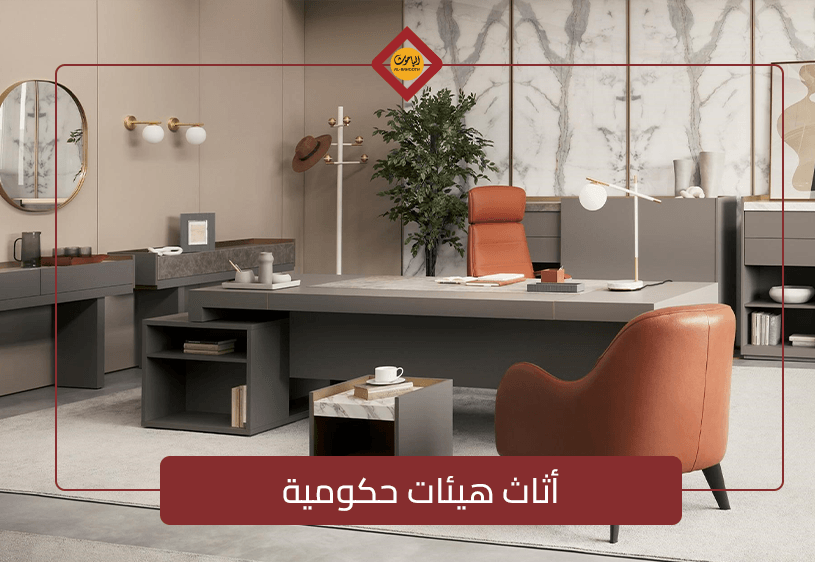
Government agencies furniture stands at the crossroads of quality, regulation, and workplace innovation. Every chair, desk, and storage unit purchased for governmental spaces must meet precise standards that go far beyond ordinary office needs. From durability and ergonomic design to environmental compliance, these pieces shape how public employees work and how public money is spent. The process of furnishing a government facility is, therefore, both a design challenge and a demonstration of accountability.
What is government agencies furniture?
Government agencies furniture refers to the desks, chairs, tables, cabinets, and other specialized furnishings designed specifically for public sector offices and institutions. Unlike standard office furniture, it follows strict governmental regulations that ensure durability, sustainability, ergonomics, and alignment with environmental policies. Every piece must meet specific technical criteria and performance standards set to ensure long-term usability and compliance with public sector requirements.
This type of furniture stands apart because of the mandatory certifications, official documentation, and adherence to approved supplier lists it requires. Beyond functionality, government agencies furniture reflects values of transparency, organizational efficiency, and accountability in service to the public. Each item becomes part of a broader system that emphasizes consistency, responsible resource use, and a professional work environment within government institutions.
What are official requirements for government agencies furniture?
Government agencies furniture procurement must follow regulated and structured standards to ensure compliance and transparency. The process typically begins with assessing whether existing furniture can meet current needs before any new purchase is authorized. Only after confirming that reuse or refurbishment is not viable do agencies proceed to select items from a standardized, pre-approved catalog.
Key procurement standards include:
- Agencies must prioritize reuse of existing assets before considering replacement.
- Refurbishment options should be fully evaluated to reduce waste and cost.
- The purchase of new furniture is allowed only as a final step, following documentation justifying the need.
- All materials must meet emission and safety compliance standards as defined by government regulations.
- Every transaction requires transparent records and supporting documentation to ensure accountability.
What role does sustainability play?
Sustainability is embedded in every step of the furniture procurement process for government agencies. The principle of extending product life—through reuse and refurbishment—reduces environmental impact and public expenditure simultaneously. When new furniture is needed, preference is given to environmentally certified products that meet eco-design and low-emission criteria, aligning with institutional goals of resource efficiency and carbon footprint reduction.
Why are technical specifications vital?
Technical specifications set the foundation for safety, quality, and ergonomic performance in government agencies furniture. These criteria ensure that each piece meets recognized standards for durability, comfort, and workplace health. Specifications typically detail measurements, structural materials, finishes, and certifications like ANSI/BIFMA or GreenGuard to confirm compliance with performance and environmental benchmarks.
For example, an ergonomic office chair purchased for government staff must not only match the required dimensions and load capacity but also carry valid certification proving it complies with safety and emission regulations, ensuring both employee well-being and procurement integrity.
How is quality ensured in government agencies furniture?
- Solid wood and MDF/HDF are commonly selected for their structural strength and ability to retain shape under continuous use.
- Treated metals are used for frames and support structures, offering resistance to corrosion and maintaining stability over time.
- Tempered glass is favored for desks and tables, as it combines aesthetic appeal with enhanced safety properties.
- Eco-certified textiles provide comfort and sustainability, ensuring compliance with environmental standards.
- All these materials are chosen for their moisture resistance, scratch-proof surfaces, and capacity to endure heavy daily usage typical of government work environments.
How is durability tested?
Durability of government agencies furniture is verified through a sequence of practical evaluations that replicate real-use conditions. Sample units are first reviewed to ensure material consistency and workmanship. These samples undergo in-office trials, where furniture is observed under everyday operational stress. This is followed by strength and load assessments, measuring how pieces handle weight and repetitive movement. Finally, user feedback is gathered to assess ergonomic performance and detect potential weak points. This multi-step process guarantees that only furniture meeting exacting endurance standards proceeds to installation.
What certifications are required?
- ANSI/BIFMA – Confirms the structural safety and mechanical reliability of furniture products.
- GreenGuard – Certifies low chemical emissions, ensuring healthy indoor air quality across government workspaces.
- ISO 9001 – Verifies that the manufacturing process follows internationally recognized quality management systems.
- Regional fire-resistance standards – Mandate that materials used minimize fire risks and comply with local safety regulations.
All relevant certifications and compliance documents must be included in supplier bids to confirm that each furniture item meets both global and regional quality requirements.
What makes government agencies furniture different from standard office furniture?
Government agencies furniture must comply with strict environmental criteria that far exceed those applied to standard office furniture. Every piece must be crafted from materials whose origins are fully traceable, ensuring transparency in sourcing and production. These items are produced with low-emission processes and typically integrate recyclable or organically derived content to minimize environmental impact.
Suppliers are obligated to provide Materials Safety Data Sheets (MSDS) specifying the types of glues, finishes, and chemicals used, along with documentation that certifies the percentage of recyclable content. Even adhesives and surface treatments must meet approved standards, ensuring they release minimal volatile compounds into the workspace and preserve indoor air quality.
How is standardization enforced?
Standardization in government agencies furniture is meticulously regulated so that every unit matches in dimensions, surface thickness, and finish details. This consistency enables easy asset reuse and interchangeability between departments, reducing waste and promoting sustainability in long-term furnishings management.
How is user experience addressed?
User experience serves as a critical factor in evaluating government agencies furniture. Each design undergoes sample testing and ergonomic assessment to guarantee comfort, adjustability, and proper posture support for a broad range of users. For example, office chairs may be tested for lumbar support and seat adaptability, ensuring they maintain user health and productivity throughout extensive work hours. Continuous employee feedback loops further refine these products, ensuring both functionality and well-being remain central to their design.
How do sustainability and safety regulations shape government agencies furniture?
Sustainability has become a central standard in the procurement of government agencies furniture, reflecting a broader commitment to environmental responsibility. Agencies are required to prioritize materials and processes that minimize their ecological footprint. Furniture is often made using recycled or renewable resources, and manufacturing methods focus on reducing energy consumption and waste. This alignment with sustainability goals ensures that public institutions not only meet regulatory expectations but also demonstrate leadership in protecting natural resources and promoting long-term ecological balance.
What are key safety requirements?
- Fire resistance: Furniture materials must pass certified fire safety tests to ensure that they delay ignition and help prevent the rapid spread of flames in the event of an emergency.
- Low VOC emissions: Government offices demand furniture with low volatile organic compound emissions to maintain indoor air quality and safeguard employees’ respiratory health.
- Non-toxic finishes: Surfaces and coatings must be free from harmful chemicals to avoid exposure risks for staff during daily use.
- Documented safety tests: Every item, from chairs to storage units, undergoes laboratory verification to confirm compliance with occupational safety standards before approval.
How does ergonomics factor in?
Ergonomics is an essential part of government agencies furniture design, ensuring that furniture supports physical well-being over long working hours. Chairs are created with lumbar support and adjustable height mechanisms, while desks allow flexible positioning to reduce strain and maintain healthy posture. For example, adjustable workstations help employees alternate between sitting and standing, improving circulation and comfort throughout the day. This scientific approach fosters productivity and prevents long-term musculoskeletal issues, aligning workplace design with recognized medical and safety guidelines.
What design trends are emerging in government agencies furniture?
Modern government agencies furniture is evolving toward smart and connected workspaces. The integration of technology is no longer a luxury but a necessity to support efficiency and collaboration. Many offices now use desks equipped with built-in USB ports, cable management systems, and power outlets hidden within the tabletop structure. These details keep surfaces organized and free from clutter, promoting a more productive work setting. Modular furniture pieces are also gaining popularity, allowing for easy reconfiguration when new technologies or devices are introduced, ensuring that the workspace stays adaptable and future-ready.
What aesthetic trends dominate?
- Neutral color palettes such as gray, black, and brown dominate the design of government offices, reflecting professionalism and creating a calm environment that supports concentration.
- Minimalist shapes and clean lines emphasize order and discipline, aligning with the institutional image of government entities.
- Durable and matte finishes are often chosen for their timeless look and low maintenance, ensuring furniture longevity without frequent replacements.
- Subtle accents in texture or material—such as wood grain or soft metal tones—add warmth and approachability without compromising formality.
How is space efficiency achieved?
Space optimization has become essential in modern public-sector workplaces, especially in smaller administrative offices. Furniture solutions now focus on multifunctionality—desks that incorporate built-in storage, filing compartments, or adjustable components reduce the need for additional pieces. Modular systems make it easier to rearrange layouts according to staff size or departmental needs, maximizing every square meter. This strategic approach not only saves space but also maintains a clean, well-organized environment that enhances workflow and supports a contemporary, professional image.
How do policies and regulations affect government agencies furniture supply?
- Protecting public funds: Regulations ensure that spending on government agencies furniture follows strict accountability standards to prevent waste or mismanagement of resources.
- Achieving economic value: Procurement policies require comparing prices, quality, and durability to guarantee that each purchase delivers the best long-term value for taxpayers.
- Ensuring transparency: Open bidding and clear evaluation procedures allow every step of the furniture supply process to be traceable and verifiable.
- Promoting equal opportunity: Rules are designed so that all qualified suppliers, regardless of size, can compete fairly in furnishing government workspaces.
- Meeting actual needs and inclusivity: Agencies must justify purchases with precise technical specifications that respond to necessity and accessibility, including adaptations for individuals with disabilities.
What documentation is required?
- Product samples: Agencies may request physical samples of desks, chairs, or storage units to assess quality and finish before awarding contracts.
- Technical catalogs: These provide detailed descriptions, materials, and dimensions for all government agencies furniture items under consideration.
- Certification sheets: Suppliers must include documents proving that materials and manufacturing processes comply with national standards and safety regulations.
- Compliance declarations: Vendors are required to confirm adherence to environmental, ergonomic, and procurement policies relevant to public sector supply.
How do unified buying entities work?
Central procurement agencies often coordinate the purchase of government agencies furniture across multiple departments. By consolidating needs into joint contracts, these bodies reduce administrative costs and streamline supplier negotiations. For example, a single procurement authority might manage all office furniture purchases for various ministries, ensuring consistent quality, faster delivery, and better pricing through bulk agreements. This unified approach increases efficiency and maintains uniform standards across government offices.
What services do government agencies furniture providers offer?
Al-Bahouth Furniture founded by Ahmad Sulaiman Ali Al-Bahouth in 1976, has transformed from an importer into a leading manufacturer of government agencies furniture. Over the decades, the company has redefined quality and reliability in this specialized field. Its evolution was driven by a commitment to local expertise, allowing it to meet the complex functional and aesthetic requirements of public institutions.
What sets Al-Bahouth apart is its integrated service model. The company provides complete interior and furniture solutions — from initial design concepts to precise manufacturing and professional installation. Each project benefits from a combination of advanced production methods and deep understanding of governmental standards, ensuring that every space is both efficient and compliant.
What are custom manufacturing options?
Government agencies often require furniture solutions that reflect their unique operational needs. Al-Bahouth and similar providers offer a range of tailored manufacturing services such as:
- Ergonomic designs that enhance comfort and functionality for employees in demanding work environments.
- Integration with modern technologies, ensuring furniture can accommodate smart systems and new digital tools.
- Locally made and imported options, giving flexibility to choose between domestic craftsmanship and global design trends.
- Full compliance with government requirements, guaranteeing every piece adheres to official safety and quality standards.
These custom manufacturing options allow institutions to create workspaces that support efficiency, comfort, and institutional identity.
How is the process simplified?
Providers of government agencies furniture streamline every stage of the project to reduce complexity for clients. Instead of dealing with multiple vendors, agencies collaborate with a single trusted partner who manages everything—from specifications and space planning to installation and post-service support.
For instance, Al-Bahouth’s system consolidates design, production, and logistics under one roof. This approach eliminates communication gaps, speeds up delivery timelines, and ensures consistency in quality across all stages of implementation.
Frequently asked questions about government agencies furniture
What agencies are part of the government?
Government agencies encompass core departments such as the Departments of Agriculture, Commerce, Defense, Education, Energy, Homeland Security, Housing and Urban Development, and Labor—each playing a vital role in national administration and public service. Because every department operates in a unique environment with distinct workflows and levels of public interaction, they require specialized furniture solutions that support efficiency, durability, and functionality across their daily operations.
What furniture is usually in an office?
A typical office—whether in a government agency or a private organization—includes a variety of furniture designed to support functionality, comfort, and daily productivity. This usually consists of desks optimized for paperwork or computer tasks, ergonomic chairs for long working hours, file cabinets and storage units for organizing documents and supplies, meeting tables that enable teamwork and planning, and reception furniture that creates a welcoming atmosphere for visitors. Each piece is selected with a focus on efficiency, durability, and alignment with the specific requirements of government operations.
What does office furniture include?
Office furniture includes a wide range of free-standing elements, each serving a specific function within the workspace. Desks provide structured surfaces for writing, computing, and administrative work; chairs support healthy posture and ensure comfort throughout the day; tables facilitate teamwork and presentations in meeting areas; computer desks are designed to accommodate technology setups and cable organization; and file cabinets keep records secure while maintaining orderly workflows. Together, these components create a professional environment that enhances productivity and operational efficiency within government agencies.
Conclusion
Government agencies furniture forms the foundation of efficient, safe, and sustainable workplaces within public institutions. By aligning with strict quality standards and integrating modern design principles, these environments become more conducive to focus, collaboration, and employee well-being—ensuring every detail contributes to higher productivity and operational integrity.