Handleless Kitchens: Gola Profile vs Push-to-Open Systems
Compare Gola profiles and push-to-open systems for handleless kitchens, including appearance, daily use, maintenance and suitability for your kitchen design.
Makaseb
October 1, 2026 at 1:15 pm AST
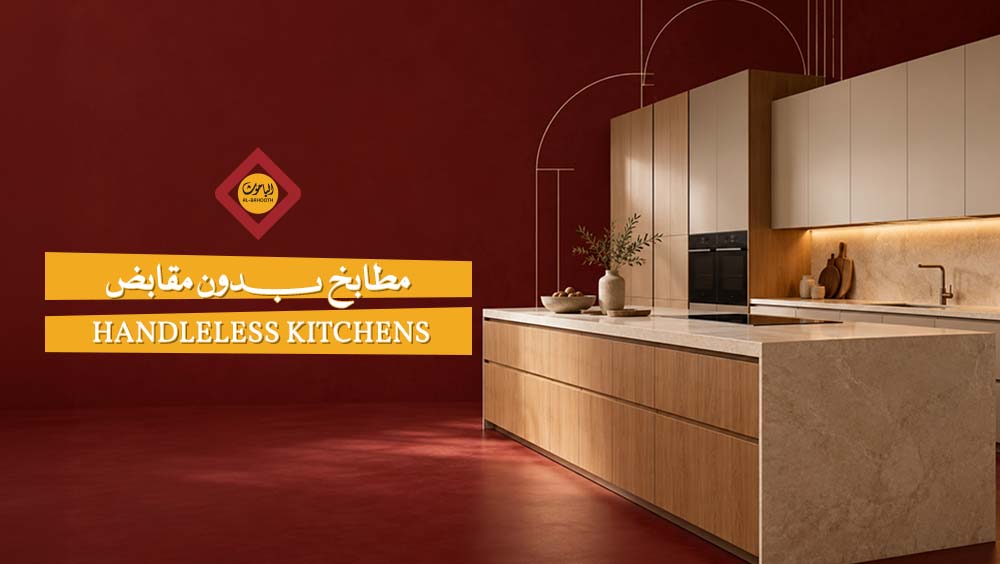
Handleless kitchens feature cabinets and drawers without protruding external handles. Instead, doors and drawer fronts open via integrated channels recessed into the cabinet frame, carved surface grooves, or hidden push-to-open touch mechanisms. Determining whether handleless kitchens suit your daily lifestyle depends heavily on the opening system selected, overall spatial layout, surface materials, and front finish specifications. The absence of a visible handle does not imply a lack of grip; rather, it integrates function seamlessly into the cabinet profile.
Planning handleless kitchens requires an understanding of available hardware mechanisms, design advantages, practical considerations, and material selections—including spatial distribution and ease of cleaning. To explore custom handleless kitchens tailored to your project requirements, contact AL-Bahooth to review specifications and request a detailed quote.
What Are Handleless Kitchens?
Handleless kitchens consist of cabinetry and drawers that eliminate traditional protruding hardware. Opening mechanisms are built directly into the edge of the door, integrated into the carcass frame, or operated via concealed touch latches. While external handles are removed, ergonomic gripping points remain neatly integrated into the overall architectural silhouette.
1. Flush Fronts with Hidden Grips
These front panels rely on integrated opening solutions embedded along the top or side edge of the door, or utilize internal hardware that releases the front with light pressure. This approach eliminates external metal handles typical of classic designs while preserving smooth daily operation.
2. Visual Continuity and Open-Plan Integration
Flat surface fronts and unbroken horizontal lines give handleless kitchens a refined, tranquil appearance, making them a popular choice for modern and minimalist kitchen design. Reducing exterior hardware offers both aesthetic and functional benefits:
- Highlighting Materials and Finishes: The absence of handles allows cabinet finishes, textures, and color schemes to stand out without visual distraction.
- Seamless Open-Plan Flow: Continuous flush surfaces visually connect kitchen joinery with adjacent living and dining spaces.
- Modern Architectural Aesthetic: Clean front profiles align with contemporary interior design trends that prioritize minimalist detailing.
At AL-Bahooth, our interior design team helps you determine the ideal specifications for your layout. Contact us today to request a custom quote for your project.
Opening Mechanisms for Handleless Kitchen Cabinets
Handleless kitchens utilize specialized hardware systems in place of conventional handles. Each mechanism involves distinct cabinet construction, installation methods, and daily tactile experiences.
1. Integrated Gola Profile Systems
The Gola profile system consists of a continuous aluminum channel recessed directly into the cabinet frame behind the door or drawer edge. Users insert their fingers into the recessed gap to pull the door open without touching an external handle. Extending across entire runs of cabinetry, Gola channels create striking horizontal lines.
- Note: Recessed Gola channels can collect dust, crumbs, or liquid spills from the countertop edge above. Channel profile design, depth, and ease of cleaning should be evaluated during early planning.
2. J-Pull (J-Groove) Front Profiles
A J-pull or J-groove design features a contoured channel routed directly into the top edge or side face of the cabinet door itself. Users grip this smooth, integrated groove to open the unit directly.
- J-pull doors eliminate external hardware and are simpler to wipe clean compared to deep channel profiles.
- However, finger-groove depth must be ergonomically sized for comfortable daily use, and edge-banding finishing quality must be high to resist wear over time.
3. Mechanical and Magnetic Push-to-Open Systems
Push-to-open hardware releases doors and drawers when light pressure is applied directly to the front face, utilizing internal spring, mechanical, or magnetic latches.
- Some push-to-open systems pop the door open slightly, requiring the user to open it fully by hand, while motorized versions extend fully.
- Precise door reveal adjustments and gap alignments are critical during installation, as mechanical wear over time can affect latch responsiveness.
Functional and Aesthetic Advantages of Handleless Kitchens
Handleless kitchens combine practical performance with minimalist aesthetic appeal. Key advantages include:
1. Unbroken Visual Flow and Minimalist Design
Eliminating external handles removes visual clutter across cabinet runs, producing uninterrupted lines throughout the space. Often referred to as minimalist kitchen design, this approach lets high-end finishes, timber grains, and colors shine.
- Continuous Lines: Flat, continuous fronts enhance the sense of spatial openness and room depth.
- Material Prominence: Premium surface textures remain free from visual interruptions.
- Cohesive Integration: Minimalist fronts allow kitchen joinery to blend effortlessly into adjacent living areas in open-concept home layouts.
2. Simplified Surface Cleaning
Wiping down smooth, flat cabinet fronts in handleless kitchens is generally straightforward because there are no protruding handles, knobs, or complex metal trim to clean around.
- While wiping flat panels is efficient, touchpoints move directly to door edges or front surfaces, requiring attention during routine maintenance.
- Recessed channels should be checked periodically as part of standard kitchen cleaning.
3. Reduced Obstructions in High-Traffic Pathways
Without protruding hardware, handles cannot catch on clothing or present sharp corners in narrow walkways. While proper clearance paths remain essential in kitchen planning, flush door faces offer a streamlined environment for busy households.
Daily Considerations and Maintenance Factors
While handleless kitchens deliver a sleek, modern aesthetic, specific daily usage factors should be evaluated during the planning stage:
1. Fingerprints and Smudges on Front Surfaces
Repeatedly touching door fronts—especially on push-to-open panels—can leave visible fingerprints over time. Visibility varies depending on surface color, sheen level, and material properties:
- Glossy and dark matte surfaces tend to show finger marks more readily than light or textured finishes.
- Anti-fingerprint matte laminates and specially treated super-matte finishes significantly reduce visible smudging, making them an excellent specification choice.
2. Debris in Recessed Channels
Recessed Gola channels and carved J-grooves create narrow horizontal ledges where kitchen dust or food crumbs may accumulate. Liquid spills from countertops can also enter upper channels, requiring prompt wiping. Selecting smooth, easy-to-reach channel profiles simplifies routine upkeep.
3. Precise Door Alignment and Hardware Tuning
Push-to-open and handleless systems rely heavily on precise carcass squaring, flush door alignment, and high-grade hinges. Over years of intensive use, minor door sagging may occur, requiring periodic hinge adjustments to maintain consistent reveal gaps and smooth release action.
To ensure your kitchen design balances aesthetic elegance with long-term functional performance, consult AL-Bahooth to discuss customized layout specifications and pricing.
Materials and Finishes for Handleless Kitchen Fronts
When specifying handleless kitchens, homeowners and designers compare various core materials and surface treatments—such as aluminum, engineered moisture-resistant MDF, high-pressure laminate (HPL), acrylic, matte/gloss lacquers, natural wood veneers, PVC, and WPC.
1. Aluminum vs. Moisture-Resistant MDF
- Aluminum Cabinetry: Provides exceptional moisture resistance and structural durability, making it well-suited for high-humidity environments and heavy-duty usage.
- Engineered MDF: Offers versatile design flexibility, allowing for smooth routed J-grooves, lacquered finishes, and intricate edge profiles.
2. High-Pressure Laminate (HPL), Laminate, and Acrylic
- HPL and Laminate: Deliver high impact resistance, scratch resistance, and an extensive array of colors and woodgrain textures for modern handleless fronts.
- Acrylic Fronts: Provide a deep mirror-like sheen that enhances visual space in compact kitchens. High-gloss surfaces require anti-scratch specifications to handle daily contact.
3. Lacquered Finishes, Natural Wood Veneers, and Other Materials
- Matte Lacquer: Offers a silky, low-reflectivity finish that minimizes fingerprint visibility while delivering a contemporary aesthetic.
- Natural Wood Veneer: Adds organic warmth and rich grain patterns that soften clean handleless lines.
- PVC and WPC: Offer alternative moisture-resistant board solutions for specific utility areas.
Regardless of the selected material, hardware quality, edge-banding precision, moisture resistance, and hinge specifications remain essential to long-term performance.
Frequently Asked Questions
1. What are the main opening mechanisms for handleless kitchens?
The primary opening mechanisms include continuous recessed Gola channels fixed to the cabinet carcass, integrated J-pull grooves routed directly into the door edge, and mechanical or electronic push-to-open touch latches. Each system offers distinct tactile experiences and hardware requirements. AL-Bahooth manufactures custom cabinetry integrating all major handleless systems at Qassim Furniture Factory.
2. Do handleless kitchens show more fingerprints?
Fingerprint visibility depends on panel color, sheen level, and surface finish. High-gloss and plain dark surfaces show touch marks more clearly, whereas light colors, anti-fingerprint matte laminates, and textured wood veneers resist visible smudging exceptionally well. Contact AL-Bahooth to sample our fingerprint-resistant finish options.
3. What is the ideal depth for handleless kitchen cabinets?
Cabinet depth depends on available floor area, built-in appliance dimensions, countertop selection, and spatial workflow. Base cabinets typically range around 60 cm in depth, but custom depths can be engineered to accommodate specific Gola profile clearances or integrated appliances. AL-Bahooth provides spatial consultations to define precise dimensions for your project.
4. Are handleless kitchens practical for daily family use?
Yes, handleless kitchens are highly practical when paired with quality opening hardware, ergonomically sized gripping profiles, and appropriate anti-fingerprint finishes. Precision manufacturing and proper alignment ensure smooth, long-term performance. Work with AL-Bahooth to engineer custom handleless cabinetry tailored to your household's daily routines.
Conclusion
Deciding to invest in handleless kitchens involves balancing clean architectural lines with practical daily usability. Opening hardware, front materials, surface finishes, and room layouts are interconnected elements that must be planned together to achieve optimal results.
Before proceeding with fabrication, verify spatial dimensions, evaluate door opening hardware, and review detailed material specifications within a comprehensive quote. For tailored design solutions and custom local manufacturing, contact AL-Bahooth via our official channels to discuss your project requirements and request a personalized quotation.