Interior Design and Custom Carpentry with Ready-Made Furniture
Explore how combining interior design, custom carpentry, and ready-made furniture delivers speed, budget efficiency, ergonomic comfort, and spatial harmony with AL-Bahooth.
Makaseb
October 14, 2025 at 5:31 pm AST
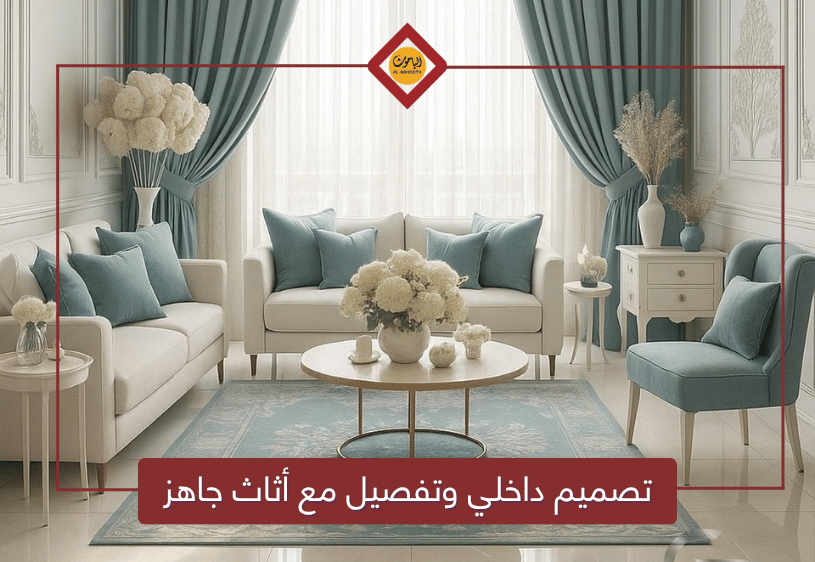
In a fast-paced world where efficiency and practical functionality are essential, achieving an integrated interior space that balances visual elegance with functional utility has become a true creative priority. Many property owners, facility managers, and business operators seek to furnish residential or commercial spaces in a manner that reflects their distinct identity without navigating prolonged execution timelines or overwhelming coordination processes.
Integrating professional interior design and custom fabrication with high-quality ready-made furniture offers a smart, balanced solution. This strategic approach harmonizes refined aesthetics with operational speed, elevating spatial quality while delivering personalized environments tailored to user requirements.
Defining Interior Design with Ready-Made Furniture Integration
Interior design integrated with ready-made furniture refers to a structured spatial planning approach that utilizes pre-manufactured commercial furniture items available in the marketplace, placing and coordinating them to establish visual equilibrium and operational flow. Rather than fabricating every component from scratch, the design focus centers on selecting and positioning off-the-shelf pieces that complement the building's architectural style and spatial dimensions.
This hybrid workflow accelerates project delivery while safeguarding aesthetic and practical standards. Ready-made furniture is treated as an organic extension of the overall design vision rather than isolated structural elements, resulting in a cohesive environment that communicates the functional intent and character of the space.
Curating and Coordinating Spaces
The coordination process begins by establishing a definitive interior design style—such as Modern, Classic, Transitional, or Scandinavian. Ready-made elements are then curated to align with the chosen style in geometry, color palette, and material textures. Proportional balance between furniture dimensions and spatial footprints is carefully maintained to prevent overcrowding and preserve open visual breathing room.
Once selected, pieces are strategically arranged alongside secondary design layers, including architectural lighting, window treatments, rugs, and decorative accessories. Furthermore, minor modifications to ready-made items—such as updating hardware finishes, re-upholstering fabrics, or adjusting leg frames—can be executed to align pieces with the brand identity or residential theme without requiring full custom manufacturing.
Ready-Made Furniture vs. Custom Fabrication: Key Differences
Understanding the operational distinction between ready-made furniture and custom carpentry helps clarify project planning and resource allocation:
- Time and Delivery: Ready-made furniture is delivered and assembled rapidly, whereas custom fabrication requires extended manufacturing timelines dependent on joinery complexity and material sourcing.
- Cost Efficiency: Pre-manufactured items generally offer a lower price point due to economies of scale, whereas custom carpentry involves individual craftsmanship and higher production costs.
- Uniqueness and Personalization: Custom fabrication allows for one-of-a-kind architectural statements, while ready-made items provide standardized choices that rely on creative styling for distinctiveness.
- Spatial Adaptability: Custom woodwork maximizes every unique nook, alcove, and wall dimension precisely, whereas off-the-shelf furniture requires careful selection to fit within existing room constraints.
- Material Control: Custom manufacturing permits direct client selection of raw timbers, veneers, and hardware, whereas ready-made furniture quality depends on the manufacturer's brand standards.
Ultimately, choosing between ready-made furniture, custom carpentry, or a hybrid approach depends on project scope, delivery deadlines, budget parameters, and functional requirements.
Meeting Project Demand Across Commercial and Residential Sectors
Combining interior design frameworks with ready-made furniture and targeted custom joinery accelerates project completion. Pre-manufactured elements reduce lead times, allowing commercial spaces to open quickly and residential properties to become habitable sooner. This methodology also provides budget flexibility by combining cost-effective baseline furniture with strategic custom feature pieces.
Application Across Sectors:
- Residential Interiors: Ready-made lounge seating and dining sets can be deployed rapidly, complemented by custom built-in media walls or custom storage units to add warmth and personal identity.
- Corporate Offices: Modular ready-made workstations, ergonomic task chairs, and standardized filing units establish scalable work environments quickly, while custom reception desks reinforce corporate branding.
- Hospitality Facilities: Hotel guest rooms and lounge spaces achieve rapid turn-around times while maintaining high visual consistency, comfort standards, and durable commercial finishes across numerous units.
Balancing Visuals, Ergonomics, and Functionality
Professional interior designers maintain a precise balance between visual appeal and practical usability. In relaxation areas, soft color palettes and tactile upholstery promote calm, whereas in operational workspaces, structured layouts and integrated storage maintain clutter-free efficiency and smooth traffic movement.
Addressing Personalization Constraints
While relying entirely on standard ready-made furniture can sometimes limit uniqueness in spaces requiring a bespoke identity, incorporating targeted custom joinery resolves this constraint. Designers can combine standardized furniture with custom feature walls, bespoke cabinetry, lighting fixtures, and curated art pieces to deliver a distinct identity without sacrificing project speed or budget control.
Hybrid Integration: Custom Joinery, Smart Tech, and Sustainability
Combining custom woodworking with ready-made furniture offers interior designers creative versatility. Custom carpentry can be reserved for focal areas—such as reception counters, feature walls, or full-height wardrobes—while ready-made pieces fulfill standard loose seating and table requirements.
Digital Tools in Spatial Planning
Advanced design software—including AutoCAD, SketchUp, and 3D rendering engines—has transformed spatial planning. Designers can build realistic 3D spatial models to test scale, clearance zones, and color schemes for ready-made furniture before procurement, eliminating fitting errors during white-glove installation.
Integrating Smart Systems
Embedding smart building technology—such as automated lighting controls, motorized window shades, and climate management systems—elevates user comfort. When combined with ergonomic ready-made furniture, smart systems turn static spaces into responsive, modern environments.
Local and Sustainable Materials
Integrating eco-friendly and locally sourced materials adds environmental value and cultural authenticity to interior projects. Utilizing sustainable wood composites, low-VOC finishes, and locally crafted stone alongside eco-certified ready-made furniture achieves a balance between luxury design and environmental responsibility.
Harmonizing Heritage and Modernity in Saudi Arabia
Saudi design firms increasingly fuse rich regional heritage with contemporary global trends. By combining custom traditional pattern work—such as refined woodwork detailing—with sleek modern ready-made furniture, designers create spaces that honor Saudi cultural identity while embracing contemporary living.
Current Interior Design Trends
- Japandi Aesthetic: Blending Japanese minimalism with Scandinavian warmth, this trend emphasizes clean lines, neutral organic tones, and soft ambient lighting to foster tranquil environments.
- Modern Biophilic Design: Incorporating raw timber, stone textures, and indoor greenery connects occupants with natural elements, enhancing well-being.
- Earthy Tone Palettes: Warm terracotta, muted sand, warm taupe, and soft olive green hues dominate modern Saudi residential and commercial interiors, creating grounded spaces.
- Textured Architectural Surfaces: Wall panels, fluted wood accents, and tactile lime-wash or matte wall finishes add depth and sophistication.
- Functional Space Zoning: Loose ready-made furniture—such as open shelving units and modular sofas—is increasingly used as floating room dividers to segment open floor plans without constructing solid walls.
Enhancing Quality of Life and Well-Being
A well-planned interior environment directly influences daily well-being, mental clarity, and physical health. Combining structured spatial planning with ergonomic ready-made furniture and smart storage reduces visual clutter, optimizes natural airflow, and enhances indoor illumination.
- Healthier Indoor Environments: Selecting low-emission, eco-friendly ready-made furniture reduces volatile organic compounds (VOCs) and indoor pollutants.
- Stress Reduction and Productivity: Organized, light-filled interiors promote emotional balance, lower stress levels, and foster mental focus in both home offices and corporate environments.
- Physical Support: Ergonomic office seating and supportive home furnishings maintain healthy posture, reducing fatigue during long hours of work or relaxation.
Saudi Arabia's Pioneers in Turn-Key Interior Solutions
AL-Bahooth Furniture has evolved from its origins as an furniture importer into a national manufacturing and interior solutions provider. The company integrates spatial design consultation, custom joinery fabrication, and pre-manufactured furniture supply under a single operational structure.
AL-Bahooth delivers comprehensive furnishing solutions across residential, commercial, and hospitality sectors, emphasizing meticulous joinery work and quality control.
Key operational strengths include:
- Custom Woodwork and Tailored Carpentry: Fabricating bespoke furniture and built-in units to exact client dimensions, material specifications, and color choices.
- Master Craftsmanship: Employing experienced teams across interior design, fine woodworking, structural joinery, and commercial upholstery.
- Scalable Project Capability: Managing turnkey projects of all sizes—from private luxury villas to large-scale hotel developments and commercial complexes.
- Global Material Standards with Local Insight: Combining imported hardware and premium raw materials with local manufacturing expertise tailored to Saudi market preferences.
Frequently Asked Questions
1. What is the difference between interior design and interior decoration?
Interior design focuses on structural space planning, spatial flow, building codes, lighting layouts, and functional architecture. Interior decoration deals primarily with surface aesthetics, color palettes, textile selection, art curation, and decorative styling. Interior design addresses functional structure, while decoration refines the surface appearance.
2. How should one decide between ready-made furniture and custom carpentry?
The choice depends on project timeline, budget constraints, and spatial requirements. Ready-made furniture is ideal for fast installation and controlled budgets. Custom carpentry is preferred when precise dimensional fitting, unique brand expression, or complex built-in storage is required.
3. Is combining ready-made furniture with interior design suitable for small spaces?
Yes. Strategic interior design utilizes sleek, multi-functional ready-made furniture and light color schemes to maximize usable square footage, creating open, clutter-free layouts without sacrificing functionality.
Conclusion
Integrating interior design and custom carpentry with ready-made furniture represents a practical, sophisticated approach for modern spaces. By balancing execution speed, budget efficiency, and tailored craftsmanship, this hybrid methodology delivers high-performance residential and commercial interiors that reflect personal identity while meeting modern functional standards in Saudi Arabia.