Interior design for government executive offices with Style
The interior design for government executive offices plays a decisive role in shaping public perception and reinforcing the authority.
Makaseb
December 31, 2025 at 1:51 pm AST
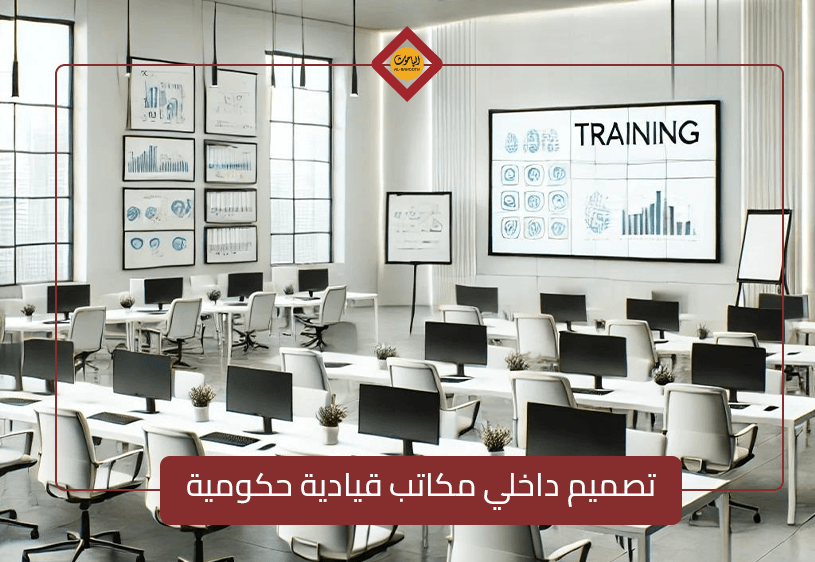
The interior design for government executive offices plays a decisive role in shaping public perception and reinforcing the authority, transparency, and professionalism of state institutions. Every design element — from spatial organization to furniture selection — reflects the values of credibility and efficiency that citizens associate with their leaders. A well-conceived design not only enhances the workplace environment but also communicates trust, order, and modern governance through its visual and functional language. Such offices are more than just workspaces; they are symbols of responsibility, openness, and prestige.
What is interior design for government executive offices?
Interior design for government executive offices is a specialized discipline dedicated to shaping spaces that serve high-ranking officials such as ministers, directors, and executive administrators. It combines aesthetic consideration with institutional purpose, ensuring that every element — from spatial layout to material selection — supports functionality, dignity, and authority. The goal is not only to create comfortable and efficient work environments but also to convey a sense of prestige and respect befitting official settings.
This field focuses on embodying the values and mission of the government through design decisions that mirror transparency, responsibility, and ethical service. It emphasizes security and confidentiality to protect sensitive operations, while also ensuring that the environment reflects the institution’s identity through visual coherence and symbolic expression. Every aspect of the design must communicate credibility and professionalism, striking a careful balance between form and function so that the space remains both representative and practical for formal procedures and executive duties.
What are the key principles?
In interior design for government executive offices, the analysis begins with an in-depth study of the available space, circulation patterns, staff numbers, and functional needs. This evaluation ensures that every square meter serves a clear purpose and supports administrative flow. The layout is planned to optimize efficiency, allowing logical and unobstructed movement paths while maintaining flexibility for future spatial adjustments or evolving organizational structures.
What about lighting strategies?
Lighting design focuses on achieving a balance between natural and artificial sources. The priority is to maximize access to daylight through well-placed openings, which enhances productivity and comfort. Artificial lighting distinguishes between work zones and areas for relaxation, using task lighting for focused activities and softer ambient lighting for meeting or waiting spaces. The correct selection of fixtures supports both functional precision and aesthetic harmony across the office.
Why does color selection matter?
Color selection plays a crucial role in defining the atmosphere and psychological impact of government office interiors, especially in interior design for government executive offices where professionalism, authority, and clarity must be reflected in every detail. Neutral and calm palettes—such as blue, green, grey, and white—promote focus, stability, and transparency, creating an environment suitable for decision-making and executive functions. Subtle integration of national identity colors reinforces a sense of belonging without overwhelming the space. For example, a muted accent wall in a representative hue or refined detailing in corporate tones can connect the office to its institutional identity while maintaining the visual elegance required in high-level executive environments.
What furniture types are best?
- Executive work desks provide structure and sophistication while offering generous working surfaces for documentation and meetings.
- Closed storage units ensure order and confidentiality, keeping sensitive materials secured and out of sight.
- Ergonomic seating supports long hours of use, designed to maintain posture and comfort during high-level discussions or extended workloads.
- Meeting tables are chosen for functionality and presence, enabling collaboration while reflecting the authority of the setting.
How to ensure quality & safety?
Quality and safety depend on choosing professional-grade materials and technical solutions suited for executive environments, particularly within interior design for government executive offices, where durability, regulatory compliance, and authority-driven aesthetics are essential. Surfaces and finishes must be robust, fire-resistant, and easy to maintain while also supporting acoustic comfort for confidential discussions and smooth workflow. Ensuring thermal balance and healthy air circulation enhances user well-being, aided by proper ventilation and the selective introduction of natural elements that soften the formality of the space. Visual unity and compositional balance are achieved through coherent lines, clear spatial hierarchy, dominant focal points such as the executive desk, and symbolic features like national emblems that reinforce identity, prestige, and the official character of the environment.
How do government executive offices differ from private sector?
Government executive offices adopt a formal and authoritative visual language, reflecting integrity, stability, and a sense of national duty. Neutral colors — such as beige, gray, and muted blues — dominate the palette, creating a calm environment that underscores professionalism. Subtle national symbols like framed emblems, official photographs, or artwork with cultural motifs reinforce the sense of state authority without overwhelming the aesthetic balance.
In contrast, private sector offices often lean toward dynamic and branded environments. They highlight company colors, use innovative materials, and integrate flexible layouts that express creativity, innovation, and market identity. The difference in design language clearly mirrors the institutions’ underlying missions: governmental offices project trust and protocol, while private offices emphasize agility and differentiation.
How are hierarchy and protocols handled?
- Layered access zones ensure that visitors and staff move according to rank and purpose, reinforcing order and respect within the administrative structure.
- Reception and secretarial buffers are strategically placed before the executive’s private office, establishing both a visual and procedural boundary that protects focus and confidentiality.
- Designated meeting rooms are spatially separated from public or staff areas to preserve decorum and accommodate official functions without disrupting workflow.
- Circulation routes within the layout follow a hierarchy, guiding movement in a way that reflects authority and organizational clarity.
How is institutional identity shown?
Institutional identity in interior design for government executive offices appears through controlled, dignified design gestures that reinforce authority and professionalism. The national flag, organizational logos, and official color schemes are displayed in a balanced and respectful manner — often integrated into furnishings, wall finishes, or executive signage. These elements communicate legitimacy, stability, and continuity, distinguishing the environment as a formal representation of the state rather than an individual or commercial brand, while preserving the decorum expected in high-level government settings.
How is privacy ensured?
Privacy in government executive offices is a fundamental spatial priority. Architectural separation between public and restricted areas prevents intrusion, while sound insulation and visual screening safeguard confidential discussions. Controlled access systems regulate visitor entry, and secure information flow mechanisms — such as document routing and discreet communication zones — maintain data integrity. Compared to the private sector’s trend toward open-plan, collaborative workspaces, the government’s approach emphasizes security, discretion, and protection of sensitive information, ensuring that the environment upholds both functional efficiency and institutional responsibility.
What modern trends influence interior design for government executive offices?
Modern interior design for government executive offices embraces the concept of flexible workspace design, creating environments that easily adapt to shifting administrative needs. Layouts are now modular, allowing offices to be quickly reconfigured for private meetings, collaborative sessions, or quiet individual work. Mobile partitions and adaptable furniture make this transformation seamless, supporting dynamic workflows without requiring structural renovation.
How is nature incorporated?
Nature now plays a central role in enhancing governmental workspaces through biophilic design. Interiors feature expansive windows that flood rooms with natural light, while indoor greenery—ranging from potted plants to vertical gardens—improves air quality and reduces stress. Natural materials such as wood and stone add texture and warmth, creating a calmer and more inviting executive environment that encourages focus and well-being.
How is sustainability achieved?
Sustainability has become a cornerstone of design for government executive offices, combining environmental responsibility with long-term efficiency.
- The use of eco-friendly certified wood ensures ethical sourcing and durability.
- Low-emission paints contribute to healthier indoor air quality and reduced pollution.
- Energy-efficient LED lighting equipped with motion and daylight sensors minimizes unnecessary power consumption.
- Advanced air conditioning systems maintain thermal comfort while conserving energy.
Each solution reflects a commitment to operate within eco-conscious parameters while maintaining the prestige and functionality expected in high-level government environments. Al-Bahouth integrates these sustainable measures from the earliest planning stages to guarantee measurable environmental performance.
What smart technologies are used?
Technological integration defines the modern government office. Centralized systems now manage lighting, temperature, and security to create efficient, comfortable environments. Automated lighting adjusts to occupancy, while climate control systems adapt in real time to external conditions. Modern video conferencing solutions enable smooth hybrid meetings, and data management platforms ensure secure coordination between departments.
Many current government executive offices showcase this transition toward intelligent spaces. Al-Bahouth employs such smart solutions to optimize daily operations, elevate user experience, and uphold rigorous safety standards.
How is well-being supported?
The latest design trends emphasize the well-being of executives and staff as a key aspect of productivity. Ergonomic, adjustable furniture helps maintain physical comfort during long hours of work, and acoustic treatments reduce noise distractions. Inviting lounge areas and small wellness nooks offer opportunities to rest and recharge.
Additional features include:
- Desks that promote healthy posture and movement.
- Spaces equipped for people with disabilities, ensuring full accessibility.
- Relaxation zones designed for informal interaction and mental recovery.
By integrating these elements, Al-Bahouth creates government workspaces that balance functionality, comfort, and human-centered design—reflecting the evolving priorities of modern executive environments.
How to apply best practices for government executive office design?
Designing spatial zoning in government executive offices requires a clear hierarchy that reflects both functionality and protocol. The layout should balance accessibility with privacy, ensuring that executive workflows run smoothly while maintaining a dignified atmosphere. A model layout typically begins with a reception area that serves as the first point of contact and establishes a formal tone. Adjacent to it lies a formal waiting zone, separated subtly through furnishings and spatial flow.
Beyond this threshold, the executive office itself should be directly connected to the meeting room, yet with controlled circulation paths to allow staff and visitors to move independently. This ensures that operational efficiency coexists with security and confidentiality — key principles in executive environments.
What materials and finishes are preferred?
- Natural woods bring warmth and stature to executive spaces, suitable for desks, wall panels, and built-in cabinetry.
- Muted marble or porcelain in the lobby adds a refined, formal appearance while emphasizing durability.
- High-quality carpets offer sound insulation and contribute to a serene, prestigious ambiance.
- Durable and easy-clean fabrics maintain a professional look while facilitating maintenance in high-traffic zones.
These materials create an environment that conveys authority, longevity, and quiet sophistication — essential in public leadership contexts.
How to optimize lighting?
Effective lighting design in executive offices depends on balancing natural light with layered artificial illumination. Windows should be unobstructed to allow daylight to dominate the workspace, enhancing productivity and morale. General lighting must provide uniform brightness without glare, while localized fixtures should support specific tasks.
Recommended lighting hierarchy:
- General lighting – ceiling systems for even illumination across rooms.
- Task lighting – desk or standing lamps providing focused light for reading and documentation.
- Accent lighting – highlighting national emblems, flags, or artwork to emphasize institutional identity.
Together, these layers bring functionality and visual harmony.
How to integrate storage and organization?
An executive office must remain uncluttered and orderly. This requires ample closed storage systems such as concealed filing cabinets and hidden drawers integrated within furniture. These allow documents, tools, and personal items to remain accessible yet out of sight, preserving a clean, professional visual language across all areas.
How to select signature furniture?
Selecting furniture for government executive offices extends beyond aesthetics — it embodies leadership and heritage. Executive desks should be handcrafted from premium wood, integrating modern power and data systems for seamless functionality. Seating must follow ergonomic standards to support long hours with comfort and poise. Examples include executive leather chairs with adjustable support and meeting tables designed for clarity of communication.
Al-Bahouth Furniture specializes in custom manufacturing these signature pieces to reflect each institution’s values, ensuring that every element — from scale to finish — reinforces both authority and authenticity.
What are common implementation mistakes to avoid?
Designing interior design for government executive offices requires a balance between professionalism, functionality, and institutional integrity. Certain design mistakes can easily undermine this balance and harm both efficiency and the public image of the office.
Overuse of luxurious or ostentatious materials
Excessive use of luxurious finishes, extravagant décor, or high-cost materials can contradict the principle of public accountability. It may also send the wrong message to citizens, implying misuse of public resources. The focus should remain on durable, functional, and timeless materials that reflect respect for the public institution.
Neglecting institutional protocol
Disregarding office protocol in the spatial layout can disrupt workflow and compromise security. Mistakes such as inefficient visitor routing, lack of designated buffer zones, or exposure of restricted areas reduce operational control and may breach confidentiality standards that executive spaces require.
Inadequate integration of storage
A lack of proper storage planning results in visible clutter, messy work surfaces, and decreased productivity. Every document and piece of equipment should have a designated place, maintaining a clean and organized visual identity that aligns with the professionalism expected in government offices.
Lack of flexibility and poor material choices
Failing to consider future adaptability of the space can be costly. Rapid policy changes or structural expansions demand flexible layouts and modular furniture. Likewise, selecting non-durable materials for flooring or furniture undermines longevity and leads to frequent, avoidable replacements.
Excessive personalization or bold branding
Inserting strong personal design touches or dominant branding elements can blur the line between institutional and individual identity. Executive offices in government settings should project the values of the organization—neutrality, consistency, and credibility—rather than the personal preferences of one official.
Poor acoustic management
Neglecting sound control compromises both comfort and confidentiality. Thin partitions, hard reflective surfaces, or open layouts can make private discussions audible to unintended listeners. Proper acoustic insulation ensures discretion during sensitive meetings and supports an atmosphere of trust and focus.
How can Al-Bahouth Furnishings help design government executive offices?
- Comprehensive space planning to ensure efficient use of every area within government executive offices.
- Consultation services that focus on understanding organizational needs, workflow, and aesthetic preferences.
- Custom furniture design and manufacturing through the company’s Al-Qassim Furniture Factory, blending functionality with elegance.
- Sourcing of furnishings from both international and local suppliers to ensure a balanced mix of global trends and regional character.
- Professional installation teams who handle fit-out with precision and compliance to safety and operational guidelines.
- After-sales support that includes follow-up maintenance and long-term client assistance.
How is quality guaranteed?
Al-Bahouth Furnishings ensures quality through certified materials, durable construction, and the craftsmanship of highly skilled artisans. Every product undergoes rigorous inspection to meet both international standards and the formal requirements of government institutions. This commitment to quality extends to project execution, where compliance with organizational and safety protocols is always prioritized.
What is the custom process?
The company follows a clear and collaborative workflow that transforms each project from concept to completion with accuracy and ease.
- Client discovery to identify goals, use requirements, and preferred design direction.
- Design proposal presenting tailored solutions aligned with executive-level functionality.
- Material selection to match durability, comfort, and design vision.
- Tailored manufacturing at Al-Qassim Furniture Factory, ensuring full control over production.
- On-site fit-out executed by expert installers for a seamless outcome.
- Client support that continues beyond delivery, reinforcing trust and long-term partnership.
Why choose Al-Bahouth?
Since 1976, Al-Bahouth Furnishings has combined global expertise with local production excellence, delivering distinguished interior design for government executive offices. Its turnkey approach simplifies every project stage, offering clients bespoke craftsmanship and efficiency under one roof. With a proven record in high-profile public sector projects, the company achieves high customer satisfaction through design precision, reliability, and adherence to institutional standards.
Frequently asked questions about Interior design for government executive offices
How long does the design process take?
The design and fit-out process for government executive offices usually extends between 12 to 24 weeks, depending on project scale, required approvals, and the level of customization. It typically begins with the concept development and space planning phase, followed by design approval cycles and material selection. Execution and installation conclude the process, with coordination between multiple departments often influencing the overall duration.
Can the interior be updated later?
Yes. Modern executive office interiors are designed for adaptability and scalability. Modular furniture systems, movable partitions, and flexible electrical layouts make it possible to reconfigure spaces with minimal disruption. Many government facilities schedule upgrade cycles every 5–7 years to align with technological and functional changes. This approach reduces demolition waste and supports longevity in furniture and materials while ensuring that interiors remain up to current standards.
Is privacy guaranteed in executive offices?
Privacy is a fundamental aspect of interior design for government executive offices. Spaces are planned to ensure acoustic insulation, controlled visual lines, and restricted access where needed. Acoustic panels, soundproof doors, and smart glass partitions help shield confidential discussions, while access control systems limit entry to authorized personnel only.
Conclusion
Precise and value-driven interior design for government executive offices is more than an aesthetic pursuit; it is a strategic tool that reinforces an organization’s mission and strengthens public trust. Well-designed executive environments reflect professionalism, efficiency, and transparency—qualities that signal integrity and inspire confidence among both employees and citizens.