Saudi government furniture supplier | Quality Solutions for Public Sector Needs
The demand for a reliable Saudi government furniture supplier has grown rapidly as ministries, agencies, and public institutions continue to modernize their work environments.
Makaseb
December 22, 2025 at 7:22 pm AST
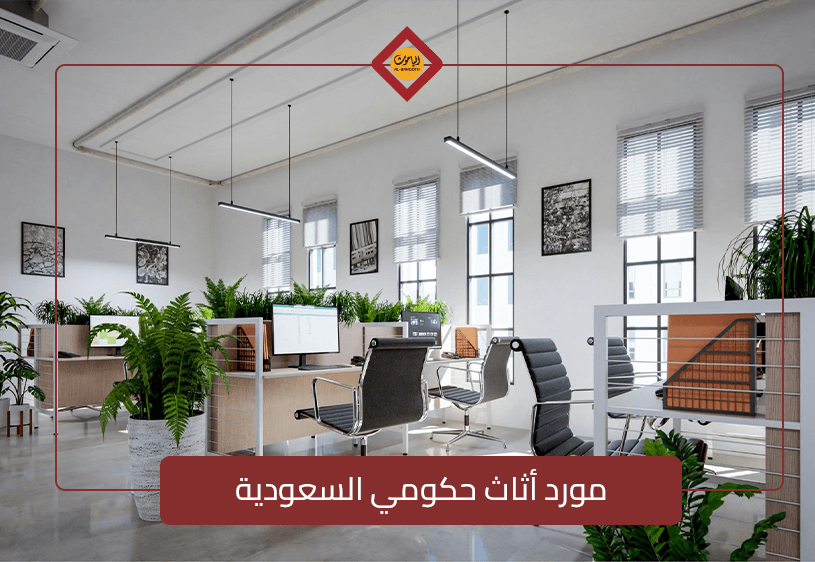
The demand for a reliable Saudi government furniture supplier has grown rapidly as ministries, agencies, and public institutions continue to modernize their work environments. High-quality, durable, and ergonomic furniture plays a crucial role in enhancing workspace functionality, promoting employee productivity, and upholding the image of public sector offices. Government projects in Saudi Arabia require suppliers who not only meet strict standards but also understand the broader vision of efficiency and sustainability shaping today’s public facilities.
What is a Saudi government furniture supplier?
A Saudi government furniture supplier is a specialized company focused on providing high-quality furniture and complete interior solutions to public entities across the Kingdom. These suppliers serve a wide range of government sectors, including ministries, public offices, healthcare institutions, schools, and various administrative agencies. Their role extends beyond simple product delivery — they ensure that each space reflects the operational, aesthetic, and functional standards required by Saudi government facilities.
These suppliers operate within the framework of the national procurement system, which emphasizes transparency, quality, and adherence to local content regulations. They play a crucial role in furnishing environments that support productivity, comfort, and durability while aligning with Saudi Vision objectives for localization and sustainability in government projects.
How do they operate?
Government furniture suppliers in Saudi Arabia work through a structured process governed by public procurement laws and tendering systems. Each project typically involves a series of approval and compliance stages to meet strict standards for durability, safety, and design quality.
- They participate in government tenders and follow standardized bidding procedures to secure contracts fairly and competitively.
- They ensure full compliance with local manufacturing quotas and national quality standards.
- They integrate design consultation with project management, ensuring that each layout fits the specific functional needs of government departments.
- They coordinate logistics, delivery, and on-site installation with precision to meet project timelines.
- They provide after-sales maintenance and support, ensuring sustainability and long-term performance of furniture installations.
What types of furniture are supplied?
The range of furniture offered by Saudi government suppliers is broad and tailored to suit different institutional needs:
- Office desks and seating: Designed for comfort and productivity within ministry and administrative workspaces.
- Storage units: Secure and durable solutions for government records, files, and equipment.
- Conference tables: Large-scale setups suitable for executive meetings and strategic discussions.
- Reception counters: Functional and aesthetic designs that enhance first impressions in government lobbies.
- Custom furniture: Bespoke pieces developed to match specific design themes or spatial constraints.
- Healthcare furniture: Functional units tailored for hospitals, clinics, and medical centers, prioritizing hygiene and ergonomic design.
- Educational furniture: Desks, chairs, and lab units built for schools and universities to promote an effective learning environment.
- Metal furniture: Heavy-duty items used for industrial and high-demand environments requiring extra durability.
A Saudi government furniture supplier typically balances locally manufactured items with imported components, offering both standard and custom-made products. Their projects often include turnkey solutions that combine interior design, manufacturing, delivery, installation, and ongoing maintenance—ensuring government spaces are ready for immediate use with seamless quality control.
What are the legal and regulatory frameworks?
The procurement landscape for any Saudi government furniture supplier is governed by a structured legal system designed to uphold integrity in public spending. The Competition Law and the Government Procurement Law serve as the core pillars. Together, they ensure that all contracts are awarded through clear and competitive procedures, preventing monopolistic practices and favoritism. These laws reinforce transparency, making every stage—from tender announcement to contract execution—traceable and open to scrutiny.
Beyond transparency, these laws prioritize efficiency and accountability in the use of public funds. Procurement procedures are built to encourage equal opportunities among suppliers, balancing competition with quality assurance. The tender system’s main objectives revolve around achieving economic efficiency, maintaining fair competition, and giving all qualified vendors a fair chance to participate—creating a balanced environment that benefits both the government and the private sector.
Who are the overseeing authorities?
Several authorities oversee public procurement to ensure that standards are upheld and procedures are followed correctly. Their coordination ensures that regulations are applied consistently across all government entities.
- Government Tenders and Procurement Authority (GTAPA): Supervises tender management and ensures compliance with the Procurement Law.
- Ministry of Finance: Provides regulatory and financial oversight to secure proper allocation and use of public funds.
- Etimad Platform: Serves as the national digital portal where suppliers register, access tenders, and manage bidding processes electronically.
What bidding requirements exist?
To qualify as a Saudi government furniture supplier, companies must meet specific conditions that demonstrate legal status, technical capacity, and financial reliability.
- Suppliers must complete registration on the Etimad online platform to gain access to active tenders.
- They are required to submit detailed technical and financial proposals that meet the project’s specifications.
- A bank guarantee must often accompany the bid to confirm financial commitment and protect the contracting authority.
- Essential documentation includes valid Commercial Registration, Industrial License, VAT certificate, and Zakat certificate.
- All suppliers must comply with national procurement regulations and local content rules, which encourage the inclusion of Saudi-made furniture and materials whenever feasible.
These requirements preserve the credibility of the tender process and strengthen local industry participation in Saudi Arabia’s public procurement ecosystem.
How are suppliers selected and evaluated?
The process of selecting and evaluating a Saudi government furniture supplier follows a structured, transparent, and performance-based approach. Suppliers are assessed on multiple criteria that ensure the quality, durability, and safety of furniture for government use. Evaluation covers price competitiveness, technical compliance, material standards, and adherence to national and international benchmarks, all while promoting local content and supporting Saudi manufacturers.
What technical standards apply?
The technical standards outlined in government tenders are designed to guarantee that every furniture piece meets functional, safety, and accessibility requirements. These standards ensure quality consistency and fair competition.
- Compliance with Saudi or international furniture standards that define material quality, structural performance, and ergonomic design.
- Fulfillment of accessibility requirements for users with disabilities, ensuring inclusive and safe design.
- Prohibition of any brand-specific or proprietary criteria to maintain fairness among suppliers.
- Submission of detailed technical datasheets and certificates of compliance that verify the proposed products meet the specified technical norms.
- Where applicable, demonstration of environmental compliance, supporting sustainability goals within government procurement.
How is experience assessed?
The experience of a supplier is a crucial factor in evaluating their ability to deliver reliable furniture solutions for government entities. Assessment focuses on verified performance and operational capability.
A Saudi government furniture supplier is required to present comprehensive documentation of previous successful projects, especially those completed for government or institutional clients. For example, a company that has furnished offices for multiple ministries can demonstrate both scale and reliability, proving its ability to manage large logistical operations while maintaining consistent quality standards.
What certifications are needed?
To qualify as an approved Saudi government furniture supplier, companies must present up-to-date certifications and licenses that confirm their legal and operational readiness.
- Commercial Registration (CR) confirming the company’s legal business status.
- Industrial or Investment License validating its manufacturing or supply authorization.
- VAT and Zakat Certificates confirming tax and financial compliance.
Together, these documents ensure that only qualified, accountable, and compliant suppliers participate in government tenders, reinforcing transparency and trust in public procurement procedures.
What services do Saudi government furniture suppliers offer?
Saudi government furniture suppliers provide fully integrated services that cover every stage of furnishing public institutions — from concept design to ongoing maintenance. Their offerings typically include design consultation, custom manufacturing, logistics, installation, project management, and continuous after-sales support. Companies such as Al-Bahouth Furniture exemplify this approach, blending European, Chinese, and Turkish imports with in-house manufacturing under strict quality and sustainability standards.
What is custom design & manufacturing?
Custom design and manufacturing represent the foundation of what a Saudi government furniture supplier delivers. These services ensure that every piece aligns precisely with the client’s functional, aesthetic, and spatial requirements while adhering to government regulations and environmental standards.
- The process begins with gathering the client’s requirements, understanding the purpose, scale, and design expectations of the space.
- Next, specialists prepare design proposals that reflect visual harmony, practicality, and compliance with workplace or institutional needs.
- Once approved, production takes place with precision craftsmanship using local or imported materials—often a mix of European quality, Chinese efficiency, and Turkish finishing.
- Before mass production, a prototype is developed and reviewed with the client for approval, ensuring exact satisfaction with design and functionality.
How is delivery & installation managed?
Delivery and installation are meticulously coordinated to guarantee smooth project execution. Suppliers plan and implement every logistical detail to ensure efficiency, safety, and minimal disruption to government operations.
- Logistical planning starts once manufacturing is complete, determining transport routes and timelines.
- Furniture is then delivered on time to the site, carefully packaged to avoid any damage in transit.
- A skilled team handles professional on-site assembly, ensuring structural stability and accurate placement.
- Continuous coordination with client representatives ensures alignment with project specifications and schedule.
- Finally, a comprehensive inspection confirms that every item meets quality standards before project handover.
What about maintenance & after-sales?
Maintenance and after-sales support are essential to sustain the durability and performance of government furniture installations. Reputable suppliers commit to long-term service, particularly for large-scale or mission-critical environments.
They perform scheduled inspections to evaluate the condition and functionality of furniture pieces, offer spare parts when replacements are required, and provide on-demand repair services to address any emerging issues promptly. In addition, clients benefit from ongoing operational support, ensuring that all furnishings remain in optimum condition and continue to serve effectively for years to come.
What types of government contracts exist?
What are framework agreements?
Framework agreements are long-term contracts, typically lasting around three years, established between government entities and accredited suppliers. In the context of a Saudi government furniture supplier, these agreements secure a continuous and reliable supply of office and institutional furniture throughout the contract period. They define the product categories, prices, and service standards in advance, eliminating the need to negotiate each order separately.
Such agreements play a crucial role in ensuring supply security, streamlining procurement operations, and achieving cost efficiency. By standardizing procedures and maintaining stable pricing, government departments can plan budgets more accurately and avoid delays. Suppliers, in turn, gain predictable demand, allowing them to maintain stock levels, meet deadlines, and comply with technical and service specifications consistently.
When is direct procurement used?
Direct procurement is applied when there is an urgent or highly specialized requirement that cannot wait for the timeline of a formal tender. In these situations, government organizations are permitted to contract directly with authorized suppliers who meet the necessary compliance standards. This method allows the swift acquisition of specific furniture solutions, ensuring that essential operations are not disrupted by administrative delays.
How are ongoing needs handled?
Routine and ongoing furniture needs are managed through the established framework contracts. These cover regular stock replenishment, furniture upgrades, and rollouts for newly built or renovated facilities. Each request made under the contract must adhere strictly to the predefined specifications, delivery schedules, and service commitments. By structuring such recurring orders through these agreements, the government maintains consistency in quality and ensures that every piece delivered fulfills the performance and compliance requirements expected from approved suppliers.
FAQ: Saudi government furniture supplier
Who is the biggest contractor in Saudi Arabia?
The Saudi Binladin Group (SBG) is the largest contractor in Saudi Arabia, recognized for managing massive government infrastructure projects such as airports, roads, and public complexes. Its extensive portfolio and long-standing expertise make it a central partner in national development initiatives.
How to become a supplier in Saudi Arabia?
Becoming a registered Saudi government furniture supplier requires completing several structured steps: preparing official documentation such as the Commercial Registration, Industrial License, Zakat certificate, VAT registration, and—for foreign companies—the Investment License; registering on the Etimad procurement platform with full company details for verification; submitting qualification documents including company profiles, catalogs, and technical specifications; complying with local content requirements by incorporating locally sourced materials or services; and finally awaiting approval, after which the company is listed as an authorized supplier eligible to participate in public tenders across ministries and government agencies.
What are the top 3 imports of Saudi Arabia?
Saudi Arabia’s major imports typically include machinery and equipment, vehicles, and electronic goods. These sectors support ongoing infrastructure growth and industrial development across the kingdom.
Conclusion
Saudi government furniture suppliers play a crucial role in shaping efficient and inspiring work environments across public institutions. By providing functional, durable, and aesthetically aligned furniture solutions, they contribute directly to workplace excellence and operational continuity. Their efforts also align with Vision 2030’s objectives by supporting local manufacturing, fostering innovation, and enhancing the competitiveness of Saudi industries in both quality and sustainability.