The Difference Between Natural and Engineered Marble for Kitchens
Unsure whether to choose natural marble, quartz, or granite? Compare kitchen countertop durability and care to decide with Bahooth Factory.
Makaseb
September 3, 2026 at 1:56 pm AST
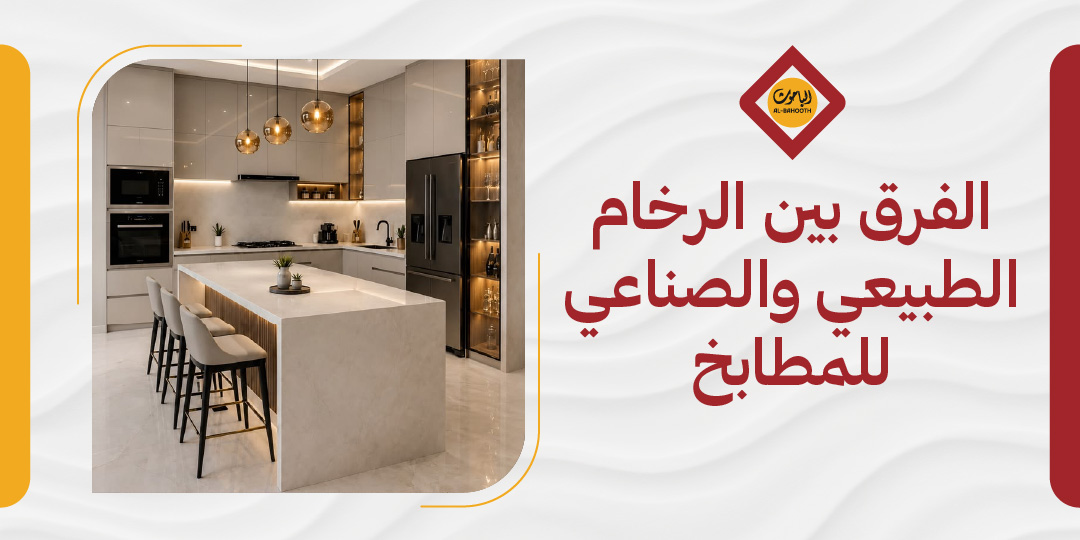
The difference between natural and engineered marble for kitchens is a question frequently asked by many homeowners in Saudi Arabia and the Gulf region when preparing a new kitchen or upgrading their countertops. They seek a material that harmonizes beauty with practicality, yet fear choosing a surface that looks stunning in the showroom only to prove inadequate against daily cooking realities—such as recurring heat, grease stains, and knife scratches.
Natural marble imparts an unrivaled sense of luxury to kitchen surfaces through its unique veining and authentic luster, yet it demands higher maintenance and offers lower stain resistance. On the other hand, options for engineered kitchen marble abound—ranging from quartz to porcelain and beyond—with properties varying significantly in terms of stain resistance, ease of cleaning, and heat tolerance. Therefore, a correct choice cannot rely on appearance alone; it requires a precise understanding of your usage patterns, heat exposure, installation budget, and a clear comparison with granite as a popular alternative in everyday kitchen surfaces.
If you wish to make an informed decision rather than relying solely on aesthetics, Bahooth Factory offers specialized consultations to help you determine the most suitable material for your kitchen based on actual usage and available budget. Contact Bahooth Factory today to book your consultation before making your final decision.
Understanding the Material Properties
Understanding the composition of your chosen kitchen surface is the first step toward a sound decision. The difference between natural and engineered marble goes far beyond visual appearance, extending deep into its structural makeup and daily performance. Furthermore, it is worth noting that the label "engineered marble" does not describe a single material with fixed specifications, but rather encompasses products that vary widely in composition and characteristics.
1. Natural Marble and Its Composition Natural marble is a metamorphic, calcium-based stone formed over millions of years under immense pressure and heat beneath the Earth's crust. This geologic formation gives natural marble components the distinct veining and rich colors that cannot be precisely replicated.
Every slab of natural marble is a unique masterpiece that never matches another, even if extracted from the very same quarry. This organic variation in pattern and color forms the material's true identity and accounts for its high visual value.
2. Engineered Marble and Its Composition The composition of engineered marble typically relies on blending polymer resins with natural marble dust, mineral particles, or quartz crystals. The resin binds the material and gives it a degree of flexibility, while the hard mineral particles provide an appearance that mimics natural stone.
The characteristics of resin-based surfaces vary greatly depending on the proportion of resin in the formula, the quality of added materials, and the manufacturing and installation methods. Therefore, one cannot generalize heat or scratch resistance across everything labeled as "engineered marble."
3. Confusion in Commercial Terminology The market uses the term "engineered marble" loosely to cover fundamentally different products. This creates confusion for many shoppers and makes comparisons inaccurate if based solely on marketing names.
Prominent materials that often fall under this broad term include:
- Engineered Quartz: A composite surface made of natural quartz crystals and resins, whose performance is determined by the ratio of its components.
- Composite Marble: Combines thin layers of natural marble with a supportive backing of other materials to reduce thickness and weight.
- Solid Surface Acrylic: A homogenous surface based on acrylic resin with added minerals, known for its shaping flexibility.
- Pure Resin Surfaces: Differ distinctly in hardness and durability from engineered quartz.
For this reason, when selecting any kitchen countertop, always request the precise technical name of the product along with its full specification sheet, rather than relying on a marketing label that may not reflect its actual composition.
Differences in Daily Use
Choosing a countertop material extends beyond aesthetics to your actual day-to-day experience—from food prep spills and stains to moving heavy cookware and performing routine cleaning. The true difference between natural and engineered marble emerges on the working surface after months of actual use. Understanding these practical differences helps you make a choice based on real needs rather than initial impressions.
1. Appearance and Design Consistency Natural marble possesses an unrepeatable visual identity. Every single slab carries distinct veining and color gradations created by geological processes over thousands of years, granting the kitchen an authentic luxury that is difficult to imitate.
In contrast, engineered surfaces offer a broader spectrum of colors and patterns with a higher degree of slab-to-slab consistency. This makes them ideal for kitchens that require a uniform, seamless design over expansive areas.
Natural marble delivers organic beauty where no two slabs match, making every kitchen an exclusive showcase. Engineered surfaces, meanwhile, offer greater control over the final pattern and facilitate visual matching across different countertop sections. However, selecting a material based on looks alone is insufficient; it must align with your cooking habits and kitchen environment.
2. Heat, Scratches, and Stains Natural marble is not a maintenance-free material—a fact many overlook. A simple spill of lemon juice or tomato sauce can leave an etched mark on a polished surface if not wiped away immediately. Rapid cleanup is an essential habit when living with natural marble.
Engineered surfaces containing resins, despite their advantages, can suffer damage if subjected to direct contact with piping-hot cookware. Using trivets and heat pads on these surfaces is not merely a suggestion, but a vital practical measure to protect the integrity of the surface.
3. Porosity and Ease of Cleaning The porosity of natural marble is one of its primary functional traits distinguishing it from many engineered alternatives. Porosity means the surface can absorb liquids if not regularly sealed, demanding constant attentiveness during meal preparation.
Sealing natural marble reduces liquid absorption and adds a protective barrier, yet it does not offer complete immunity against deep stains or chemical reactions with household acids. Thus, regular upkeep remains indispensable.
- Natural marble requires fast action when spills occur, as delays increase the likelihood of liquid absorption.
- Cleaning natural marble surfaces demands mild, pH-neutral cleaners, avoiding acidic or abrasive agents entirely.
- Engineered quartz, being non-porous, typically does not require periodic sealing, though this should never invite neglect in daily cleaning.
- The cleaning convenience of an engineered surface depends on knowing its exact composition rather than relying on the general "engineered" label.
4. Expected Lifespan and Maintenance Natural marble is a durable material capable of lasting for decades when handled correctly. However, its functional lifespan is tightly linked to consistent sealing, immediate spill cleanup, and avoiding harsh chemicals. Neglecting these aspects accelerates surface degradation.
The difference in longevity and care becomes clear here: certain engineered surfaces require less preventive maintenance and preserve their pristine look longer in high-traffic kitchens. Nevertheless, they are not immune to wear—gentle daily cleaning and avoiding abrasive sponges remain mandatory regardless of the material.
Pros and Limitations of Both Options
The choice between natural and engineered marble involves a balance of priorities that vary from one household to another—including desired aesthetic value, daily cooking demands, willingness to perform maintenance, and overall budget. There is no universally perfect material; what serves as a feature in one kitchen may prove a burden in another.
1. Strengths of Natural Marble
- Unmatched Authenticity: The natural veining and visual identity of each slab cannot be fully replicated, giving the kitchen a truly bespoke, high-end feel.
- Visual Depth: Genuine veining adds a rich visual dimension that printed patterns cannot reproduce with the same realism.
- Tactile Luxury: The cool, organic feel of genuine stone elevates luxury kitchen spaces.
- Ideal for Low-Acid, Aesthetic-Focused Spaces: Perfect for kitchens where visual elegance takes priority and the owner is committed to proper surface care.
2. Challenges of Natural Marble
- Absorbency: Susceptible to staining from colored liquids and oils if spills are not wiped immediately.
- Acid Sensitivity: Reacts with household acids like lemon juice and vinegar, causing etching or dullness depending on stone type and finish.
- Scratch Vulnerability: Signs of daily wear and scratches can appear over time based on the stone's hardness.
- Ongoing Care: Requires periodic protective sealing and gentle maintenance routines to preserve its appearance and extend its service life.
3. Strengths of Engineered Marble
- Design Versatility: Offers a vast array of colors and patterns, coordinating effortlessly with both classic and contemporary kitchen styles.
- Uniform Aesthetics: Slab consistency ensures seamless visual harmony across large countertops or complex layouts.
- Effortless Maintenance: Many formulations are non-porous, significantly reducing the need for intensive sealing or specialized care.
- Stain Resistance: Advanced compositions resist liquid absorption, making them exceptionally practical for heavy daily cooking.
4. Potential Limitations of Engineered Marble
- Quality Variations: Material performance varies drastically between manufacturers, formulas, and price points.
- Sensitivities: Certain resin-based formulations remain susceptible to thermal shock, scratching, or discoloration if exposed to direct heat or harsh treatment.
- Installation Dependencies: Seam quality, proper underlying support, and expert installation dictate long-term durability.
- Synthetic Feel: Lacks the authentic tactile and visual nuance of genuine stone, which may matter to homeowners prioritizing raw luxury.
Types of Engineered Kitchen Surfaces
When evaluating engineered marble options, identifying the exact technical material is essential. Engineered surfaces differ dramatically in structural composition and performance, and comparing natural stone to an undefined synthetic material leads to misleading conclusions.
1. Engineered Quartz One of the most widespread kitchen surfaces, engineered quartz is manufactured by compressing natural quartz particles with polymer resins under controlled heat and pressure. The result is a non-porous surface that excels at stain resistance and easy cleaning. However, heat trivets and cutting boards are still necessary to protect the resin content and surface finish over time.
2. Composite Marble Composite marble is made by binding crushed stone particles or marble dust with resin binders. Its performance depends entirely on the ratio of ingredients and manufacturing quality. It should not be assumed that composite marble matches quartz in durability; two materials marketed as "engineered marble" can vary widely in hardness and heat resistance.
3. Acrylic and Solid Surfaces Acrylic solid surfaces excel in seamless jointing and flexible edge profiling, making them visually appealing for custom kitchen layouts. However, before specifying acrylic for heavy cooking zones, verify manufacturer ratings for heat tolerance and scratch resistance, as these properties vary across brands.
4. Pre-Purchase Checklist Review this essential checklist before purchasing any engineered kitchen surface:
- Request the precise technical material name rather than the commercial brand title.
- Verify the exact slab thickness, as thickness directly impacts structural integrity.
- Inspect available surface finishes (matte, polished, honed, or textured).
- Confirm heat resistance limits directly from manufacturer guidelines.
- Review recommended cleaning agents and explicitly forbidden chemicals.
- Check warranty coverage for both the material and the installation craftsmanship.
- Evaluate seam joinery methods and edge profile details.
- Ensure cabinet carcass support meets weight requirement specifications.
- Confirm local supply lead times and installation scope.
Pro Tip: Always request a physical sample and inspect it under your kitchen’s actual lighting rather than showroom lights. Evaluate the texture, tone, and visual match with your cabinetry and backsplash prior to finalizing your order.
Marble vs. Granite for Kitchen Countertops
A comparison between natural and engineered marble is incomplete without evaluating granite—a powerhouse material in the kitchen countertop market. Understanding where granite fits alongside natural and engineered marble helps clarify your decision.
1. Everyday Durability of Granite Granite is a natural igneous rock known for exceptional hardness, making it a staple for high-traffic kitchens. Its resistance to scratches and direct heat generally surpasses natural marble, offering a robust, forgiving surface for heavy daily meal preparation. While granite still requires periodic sealing due to natural porosity, its rugged nature provides a wider margin of error in busy households.
2. Visual Prestige of Marble When comparing marble and granite visually, natural marble takes the lead with its soft, flowing veining and prestigious aesthetic. It remains the top choice for design-led spaces where luxury is the paramount objective. However, this beauty demands disciplined care regarding acidic spills and abrasive cleaning. Engineered marble sits in between, offering controlled visual patterns and simplified maintenance for those seeking a uniform look.
3. Quick Decision Framework
- Choose Granite: When maximum toughness, heat resistance, and scratch tolerance for heavy daily cooking are your top priorities.
- Choose Natural Marble: When unmatched elegance, authentic stone beauty, and luxury aesthetic take precedence, and you are prepared for routine maintenance.
- Choose Engineered Marble/Quartz: When you want design consistency, non-porous stain resistance, and low-maintenance convenience after verifying material quality.
Conclusion
Ultimately, choosing between natural and engineered marble comes down to setting clear priorities for your home. No single material suits every kitchen; the ideal choice depends entirely on your cooking habits, maintenance expectations, aesthetic goals, and budget.
Natural marble delivers unmatched individuality and timeless prestige, but demands diligent protection against acids, stains, and wear. Engineered marble offers design flexibility, vibrant choices, and easy cleaning, though performance varies according to specification and quality. Granite remains a premier contender for those putting sheer durability and thermal resistance first.
Before finalizing your decision, evaluate these core factors: daily cooking frequency, maintenance commitment, heat exposure, visual style, and total budget. Remember that precise measurement and expert installation are just as critical as material selection in achieving a flawless, long-lasting kitchen.
If you are still weighing your options between natural marble, engineered surfaces, or granite, Bahooth Factory provides expert consultations, hands-on material inspections, and tailored comparisons tailored to your actual kitchen requirements. Contact Bahooth Factory today to make your selection with total confidence.
Frequently Asked Questions
1. What are the disadvantages of engineered marble for kitchens? Disadvantages of engineered marble vary significantly depending on the material's composition. Lower-grade formulations or resin-heavy surfaces can suffer damage from direct hot pans, show scratches under heavy use, or experience surface dulling over time. Relying on broad marketing terms is insufficient; it is vital to inspect technical specifications and resin ratios before buying. The team at Bahooth Factory is ready to help you evaluate each engineered option against your specific cooking needs.
2. What is the best type of marble for kitchens? There is no single "best" material for every kitchen, as the ideal choice depends on personal priorities. Homeowners seeking raw luxury who do not mind routine sealing prefer natural marble. Those prioritizing stain resistance and effortless cleanup lean toward engineered quartz. Meanwhile, homeowners wanting maximum resistance to heat and scratches often select granite. Contact Bahooth Factory for a personalized recommendation tailored to your layout and budget.
3. What are the pros and cons of engineered marble? The main advantages of engineered marble lie in its vast design variety, uniform pattern continuity, non-porous stain resistance, and ease of routine cleaning. Conversely, potential drawbacks include varying heat sensitivities across brands, susceptibility to scratches on softer resin blends, and a manufactured feel that lacks the natural depth of genuine stone. Inspecting physical samples and reviewing manufacturer warranties is strongly recommended. Bahooth Factory provides full transparency on technical specs to guide your choice.
4. What are the main types of engineered kitchen surfaces? The primary engineered kitchen surfaces include engineered quartz, composite marble, solid surface acrylics, and pure resin slabs. Each material possesses distinct hardness levels, heat tolerances, and maintenance needs. Because performance varies dramatically across these categories, understanding your kitchen's functional demands before selecting a surface is essential. The specialists at Bahooth Factory are available to guide you toward the ideal material based on your design, cooking habits, and budget.