Wardrobe Lighting: Types and Recommended Locations
Discover wardrobe lighting options and the best locations for LED strips and sensors inside shelves, drawers and hanging sections.
Makaseb
November 11, 2026 at 7:50 pm AST
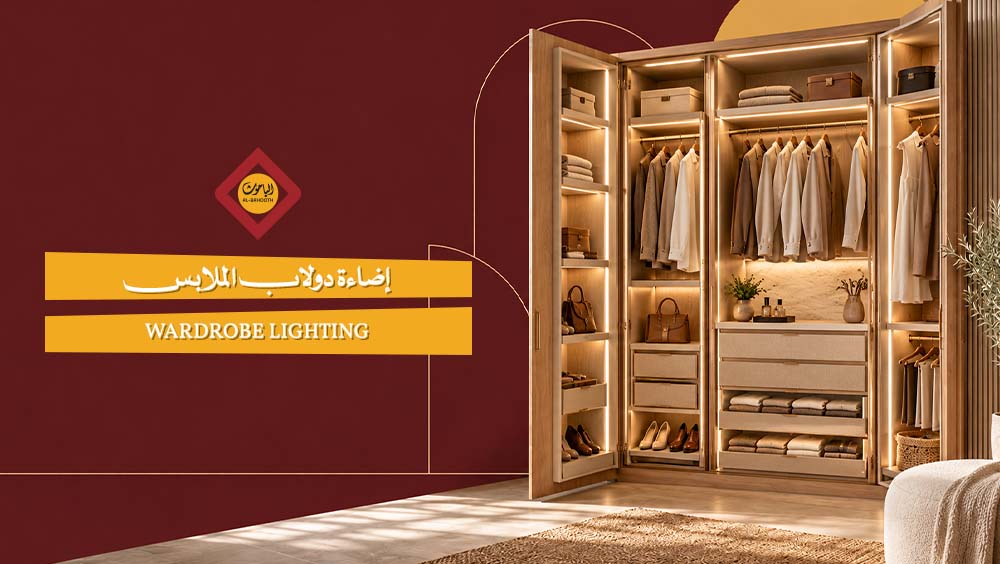
It is often difficult to distinguish clothing and small items inside a wardrobe, especially on deep shelves or inside closed drawers where room lighting cannot reach effectively. This issue frequently recurs in bedroom wardrobes with multiple compartments, where certain corners remain dark despite general ambient lighting in the space.
Choosing a lighting unit without considering its position inside the wardrobe can leave hanging areas or upper shelves without adequate coverage, while poor installation can obstruct the opening of doors or drawers. Wardrobe lighting requires careful planning that accounts for the wardrobe’s size, internal layout, and daily usage patterns—aspects explored in this article by highlighting suitable types, installation positions, and operating options. When planning custom furniture, storage breakdown and required lighting locations can be discussed with Qassim Furniture Factory (Bahooth) to achieve a practical spatial distribution tailored to every room's needs.
Types of Wardrobe Lighting and Their Uses
Selecting the appropriate wardrobe lighting depends on light distribution and fixture form factor just as much as light type; there is no single solution suitable for all wardrobe sections. Shelves, hanging zones, and general dressing room areas require distinct lighting approaches.
1. Flexible LED Strips for Shelves and Sides
Flexible wardrobe LED lighting strips allow versatile light distribution that follows the wardrobe's design and available wiring paths. They can be installed in several positions based on usage requirements:
- Under Shelves: Placed under shelf edges to illuminate the shelf directly below without causing harsh eye glare.
- Internal Sides: Mounted along the interior side walls to project a diffused light that covers deep interiors.
- Hanging Areas: Installed adjacent to hanging rods to clearly reveal suspended clothing without casting heavy shadows.
2. Linear Fixtures and Small Puck Lights for Specific Sections
Rigid LED linear fixtures differ from flexible strips in their installation nature; a linear unit is a fixed, straight piece suited for specific, straight pathways inside the wardrobe, whereas flexible strips accommodate varied installation paths and bend along design angles. A unit's placement and specifications dictate its actual light distribution pattern.
- Point/Puck Spotlights: Ideal for illuminating a specific section or single shelf within the wardrobe.
- Practical Note: Relying on a single light source may be insufficient to reveal all contents in a deep wardrobe, particularly in lower sections or far corners.
3. Overhead Lighting for Large Wardrobes and Walk-In Closets
Dressing room ceiling lighting differs from internal cabinet lighting in its primary intent: internal wardrobe lighting targets shelves and hanging rods to reveal specific item details, whereas overhead lighting illuminates the general room space to provide broad visibility while moving around. Good overhead lighting in a dressing room does not eliminate the need for internal wardrobe lighting, as each serves a distinct role within the overall spatial design.
Bahooth Store (Bahooth Furniture Company) provides interior design and furnishing solutions that incorporate strategic lighting layouts within bedroom wardrobes, customized to project requirements and room specifications.
Suitable Installation Positions Inside the Wardrobe
The optimal lighting position inside a wardrobe varies according to the contents to be illuminated. Folded clothes on shelves require a different lighting angle than hanging garments or drawer contents. Identifying the correct position for each section ensures effective use of every lighting unit without light waste or overlapping shadows.
1. Under the Front Edge of Shelves
Mounting an LED strip underneath the front edge of a shelf directs light straight onto the contents of the compartment below, improving visibility of folded items upon opening.
- Front-Mounted LED Strips: Allows light to reach the full depth of the shelf without blockage.
- Avoiding Rear Mounting: Folded garments can block light if the source is placed behind them, leaving front edges dark.
- Considering Shelf Spacing: Ensures uniform light distribution across different wardrobe compartments.
2. Side Illumination and Hanging Rod Zones
Illuminating hanging garments requires a different placement strategy than shelf lighting. Vertical side walls or the area immediately above the hanging rod play a key role in providing balanced light across suspended clothing.
- Vertical Side Mounting: Illuminates hanging clothes from both side angles without casting harsh shadows.
- Top-Down Mounting Above Rods: Reveals garments in a smooth gradient from top to bottom.
- Hanger and Door Clearance: Prevents mechanical friction or interference during door operation.
3. Light Distribution in Deep Wardrobes and Drawers
Deep wardrobes require multiple lighting units across sections that genuinely need illumination, rather than relying on a single high-lumen lamp expected to reach every corner.
- Distributing Multiple Units in Tall/Wide Wardrobes: Covers sections located far from the main light source.
- Accounting for Cabinet Depth when Setting Beam Angles: Prevents dark, shadowy backgrounds.
- Carefully Positioned Drawer Lighting: Keeps units clear of drawer slide mechanisms and access paths, noting that unit compatibility varies by cabinet design.
Impact of Wardrobe Doors and Internal Layout on Lighting
Door style and internal partitioning determine feasible installation points for wardrobe lighting, rather than external aesthetics alone. Understanding this distinction helps in selecting light fixture placement prior to execution rather than post-installation.
1. Hinged Doors and Hinge Clearance
In a hinged-door wardrobe, door swing clearance and hinge operating radiuses must be accounted for when selecting lamp or sensor positions. Unplanned installation near hardware can interfere with door motion or prevent complete closure; verifying actual clearance paths prior to mounting fixtures near hinges is recommended.
2. Sliding Doors and Light Unit Pathways
Sliding doors require evaluating track overlaps and door clearance before running wiring or placing fixtures near cabinet openings. The visible interior section changes depending on which door panel is slid open, making fixture placement dependent on understanding sliding door overlaps rather than front opening boundaries alone.
3. Shelves, Partitions, and Shadow Formation
Internal cabinet partitions directly impact light distribution. Divider panels, shelves, and heavy hanging garments can block a single top-mounted light source from lower sections, requiring independent illumination for specific compartments.
- Upper Shelves: Can cast shadows downward, blocking overhead light from lower drawers or compartments.
- Vertical Dividers: Separate cabinet space into light-isolated sections, sometimes requiring dedicated light sources for each section.
- Hanging Garments: Form dense masses that absorb light and block illumination from reaching back corners.
- Shelf Shadows: Occur when a light source is placed far from the intended compartment, reducing content visibility.
Early planning for lighting layouts should be paired with space distribution in custom-built wardrobes, without assuming all lighting options are universally adaptable to every project.
Automatic Control Options for Cabinet Lighting
Operating methods for wardrobe lighting differ from fixture types; a single fixture may support multiple control mechanisms. The choice between automatic and manual operation depends on usage habits and daily door opening frequency, alongside varying product specifications.
1. Motion Sensors Inside the Wardrobe
Motion-sensor lighting responds to movement within a specific range defined by unit specifications. Reviewing sensor orientation and standard standing positions in front of the cabinet before installation is essential, as incorrect angles or distances can affect response reliability when approaching the wardrobe.
2. Door-Activated Contact Switches
Door-activated sensors operate via a different mechanism: they respond specifically to the act of opening or closing a door based on product design, rather than general ambient motion. This system typically requires installing two mating components—one on the door leaf and the other on the frame—with precise alignment required to ensure reliable operation upon opening the door.
3. Manual Switches for Frequently Used Sections
Manual switching remains a practical choice when direct control over lighting runtime is preferred without relying on sensors. This pattern suits frequently accessed compartments, allowing lights to be turned on or off on demand. Choosing between manual switches, motion sensors, or door contact switches depends on wardrobe usage habits and door cycle frequency, without assuming generic detection angles, ranges, or shut-off delays, as specifications vary across models.
Comparing Hardwired and Wireless Wardrobe Lighting
Choosing between hardwired and wireless wardrobe lighting depends on several combined factors: proximity to power outlets, project stage (whether the wardrobe is under design or existing), and daily lighting usage rates.
1. Hardwired Lighting for Custom Wardrobes Under Design
When planning a new custom wardrobe, pre-construction design allows hardwired lighting runs to be integrated into the main schematic before assembly, resulting in clean, hidden wire routing that aligns with interior details.
- Advance Planning: Hardwired systems require establishing wire channels inside the wardrobe carcass prior to final assembly.
- Electrical Compatibility: Power supply specifications must match selected lighting units to ensure proper operation.
- Professional Installation: Consulting a qualified electrician for internal cabinet wiring is advised to avoid installation errors.
- Consistent Performance: Hardwired units provide continuous operation without requiring battery recharges or replacements.
2. Battery-Powered Wireless Lights for Existing Wardrobes
For existing wardrobes lacking direct electrical rough-ins, rechargeable or battery-operated LED lights provide a practical option that eliminates the need for new electrical conduit runs inside the cabinet.
- Ease of Installation: Wireless units require no complex wire routing, making them suitable for retrofitting into existing wardrobes without structural modifications.
- Stored Energy Powering: Operates via internal rechargeable batteries or replaceable cells instead of direct main power connections.
- Detachable Mounting for Recharging: Certain wireless units feature magnetic mounts allowing easy removal for recharging, though mounting mechanisms vary by product and are not universal.
3. Selection Criteria Between Hardwiring and Battery Power
Before choosing between hardwired conduit or wireless rechargeable units, reviewing practical implementation points is recommended:
- Power Supply Availability: Confirm access to a suitable power outlet inside or near the wardrobe before selecting hardwired units.
- Control Method: Determine whether lighting will operate via manual switches or automatic sensors to guide unit selection.
- Recharging/Battery Access: Ensure wireless units remain easily accessible for routine battery swaps or charging cycles.
- Variable Runtime Specifications: Battery life varies significantly across models; review specific product data sheets rather than making broad runtime assumptions.
- Project Stage: Hardwired solutions best suit wardrobes under custom construction, whereas wireless fixtures fit existing furniture retrofits.
Frequently Asked Questions
1. What is the best lighting for a wardrobe?
Flexible LED strips and rigid linear units suit extended shelves and hanging rods, as they distribute light evenly across the section. Small puck lights generally suffice for specific compartments or narrow alcoves. Selecting the appropriate lighting type depends on internal partitioning rather than a single universal model.
2. Where should LED strips be mounted inside a wardrobe?
LED strips are typically mounted under the front edge of shelves, along side walls, or near hanging rods, depending on compartment contents. Ensure hanging clothes do not block the light path so illumination remains effective.
3. Are wireless lights suitable for existing wardrobes?
Wireless units suit existing wardrobes when avoiding new electrical wiring runs is desired. This requires evaluating mounting methods and charging needs relative to daily wardrobe use.
4. How is wardrobe lighting planned during manufacturing?
Discussing lighting placements and wire routing while specifying custom wardrobe details ensures project requirements are aligned from the start. Bahooth Store (Bahooth Furniture Company) provides interior design and furnishing solutions covering lighting distribution in bedrooms and wardrobes. Qassim Furniture Factory (Bahooth) handles local manufacturing and customization, though lighting components are specified per project requirements rather than automatically included.
Conclusion
Selecting the appropriate wardrobe lighting begins with an accurate assessment of the wardrobe's physical configuration. Practical planning starts by identifying compartments requiring improved visibility—such as folded clothing shelves or deep hanging corners—followed by selecting unit type, placement, operating control, and power delivery method tailored to cabinet size, internal layout, door count, and available power sources.
Approaches differ based on project entry point: retrofitting an existing wardrobe relies on surface-mounted fixtures matched to current compartment layouts, whereas planning a new custom wardrobe allows integrated lighting paths to be established early within broader technical specifications (including space planning, material finishes, and electrical drop points). This distinction governs solution flexibility and final aesthetic integration.
To order custom wardrobes designed around specific lighting and storage requirements, contact Qassim Furniture Factory (Bahooth) to review designs, project scope, and request a quotation suited to your residential or commercial space.